Last updated November 20, 2026
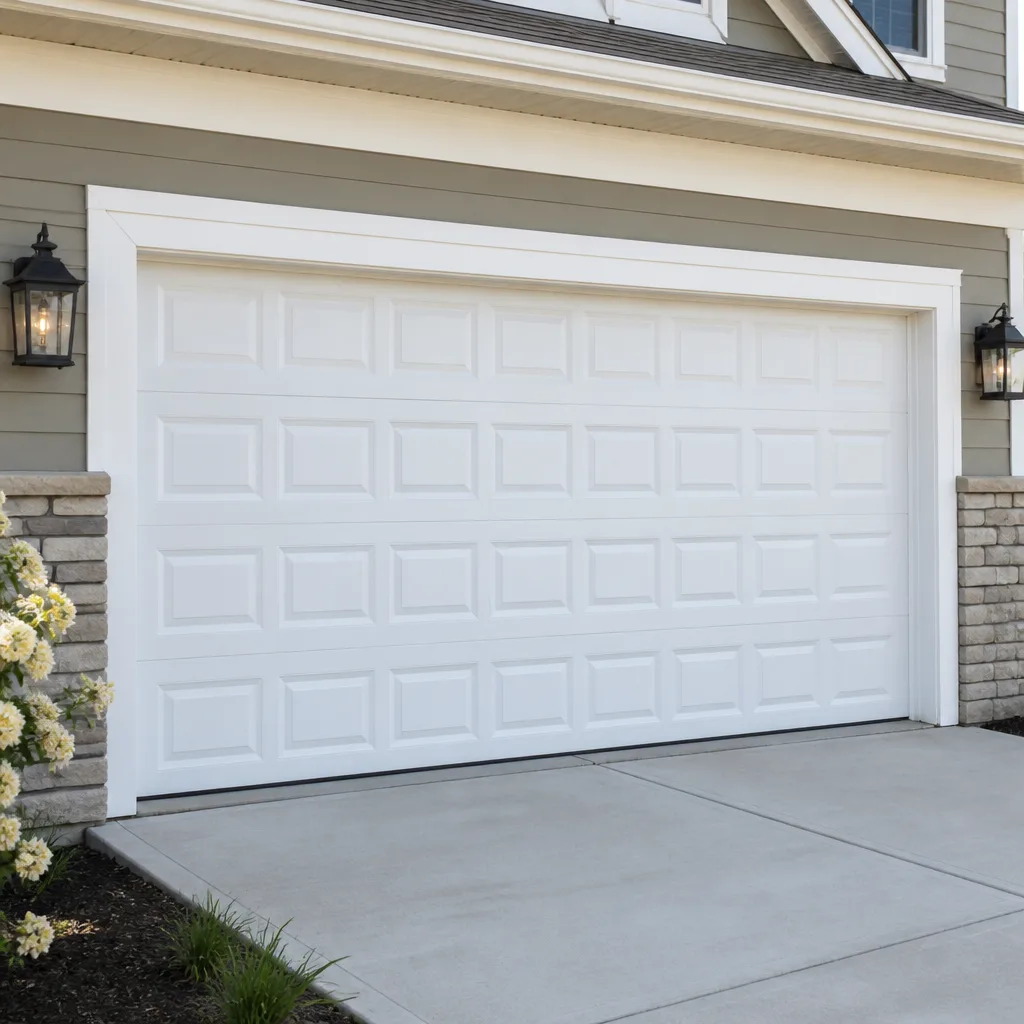 Raised-panel steel
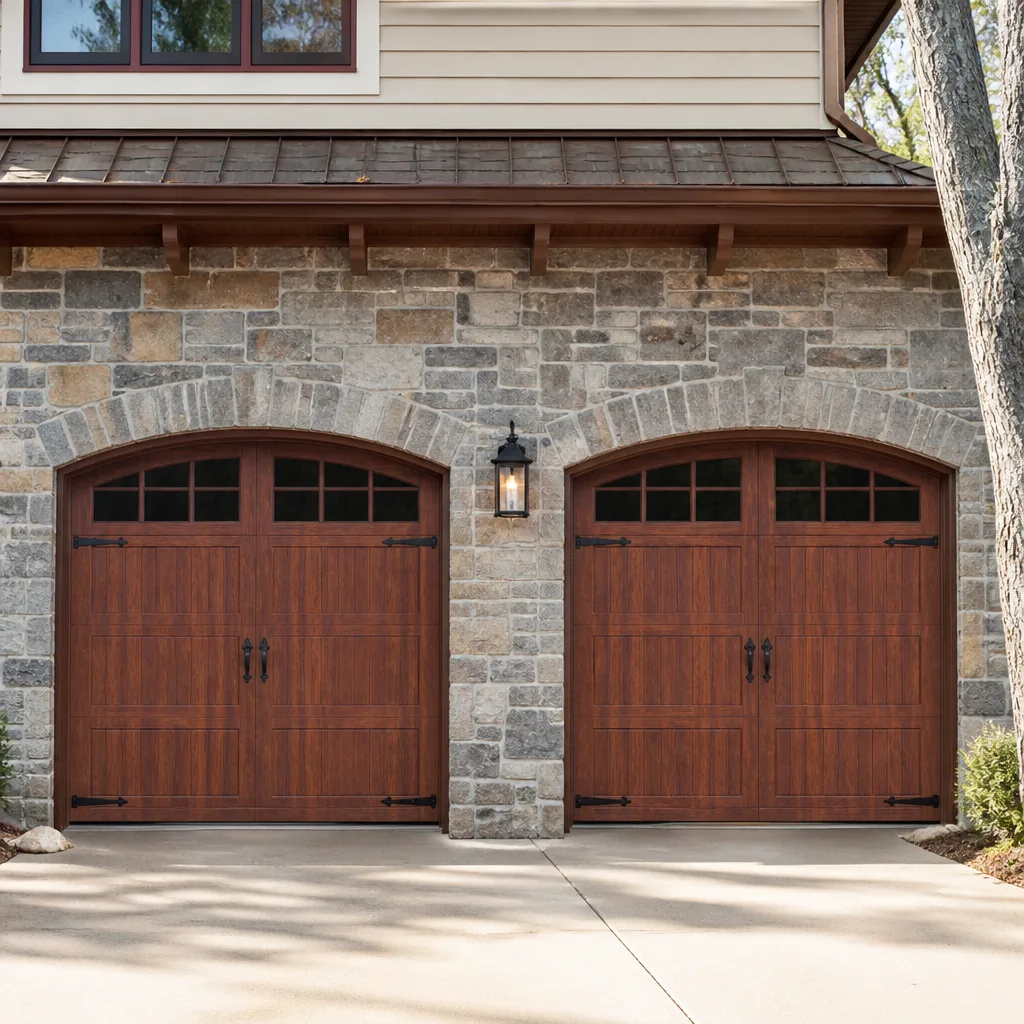 Carriage house
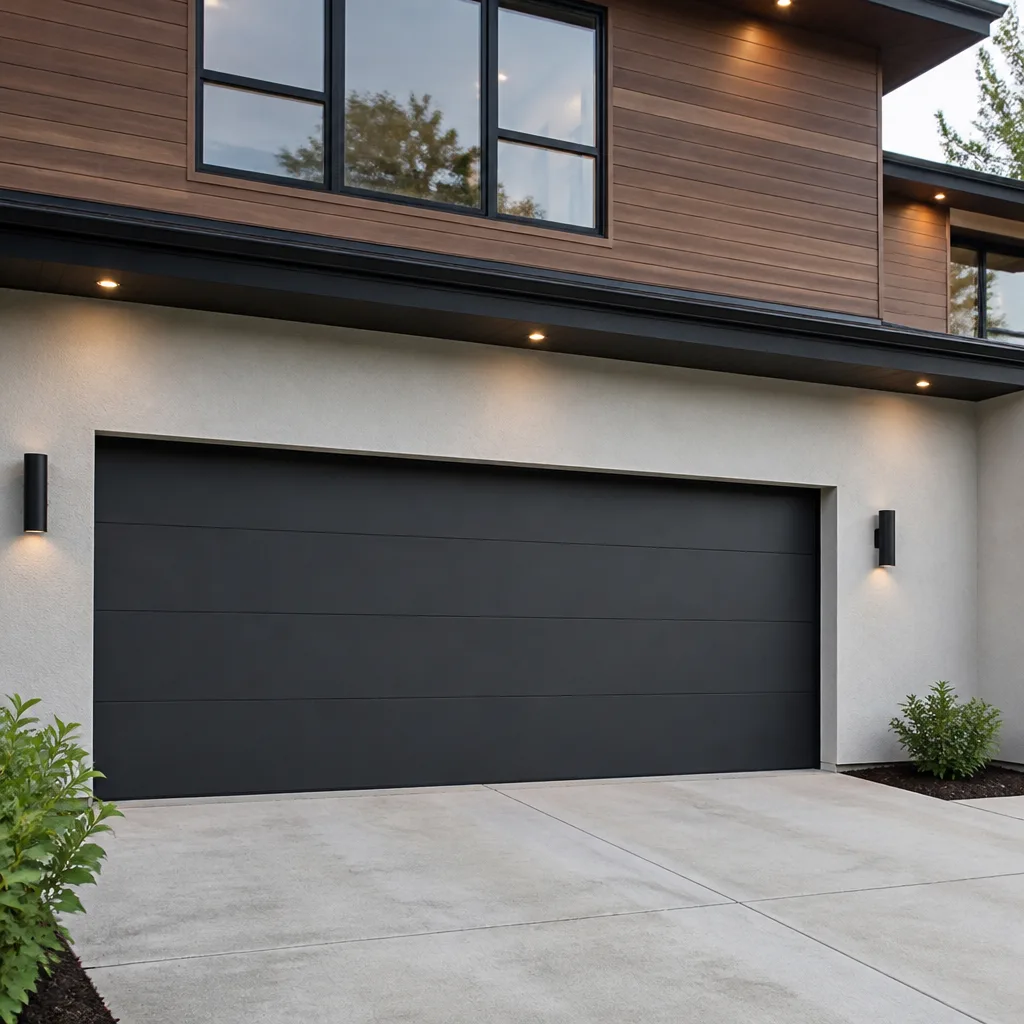 Modern flush
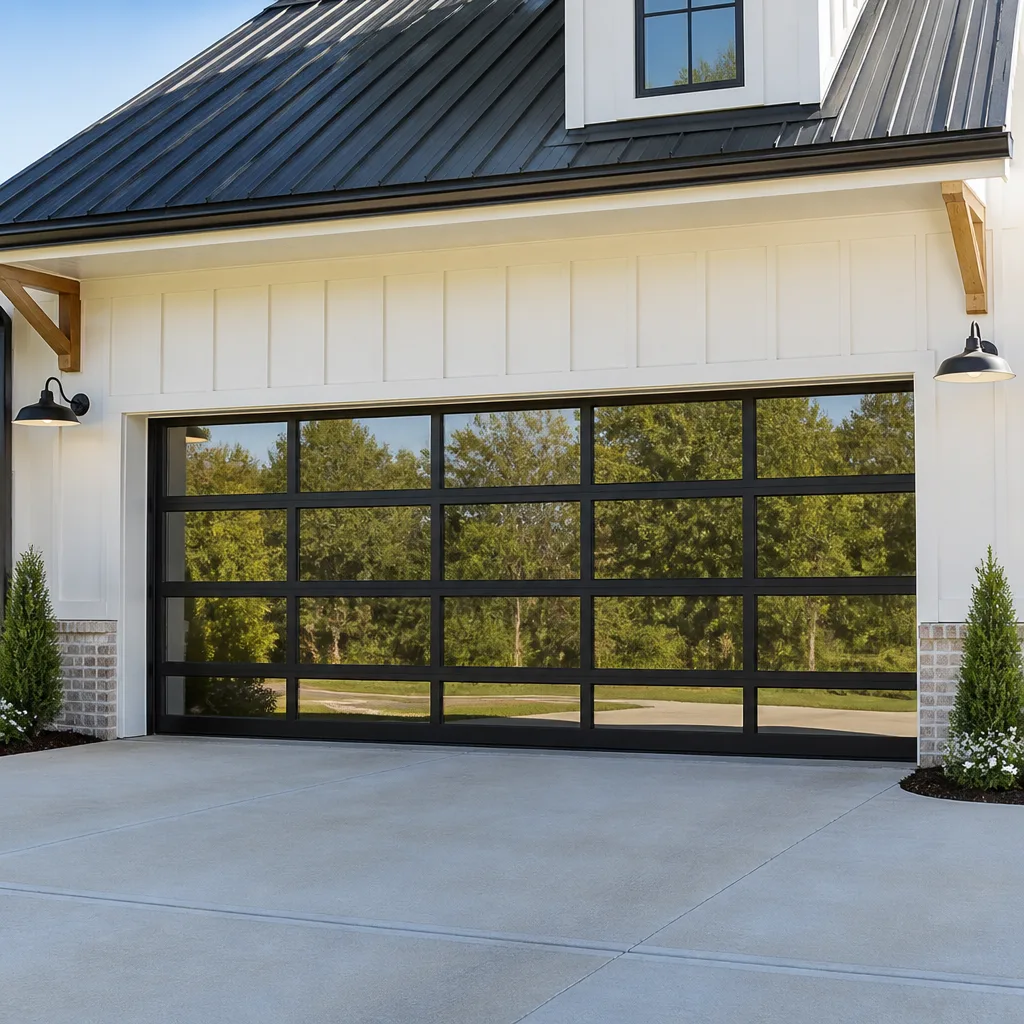 Full-view glass
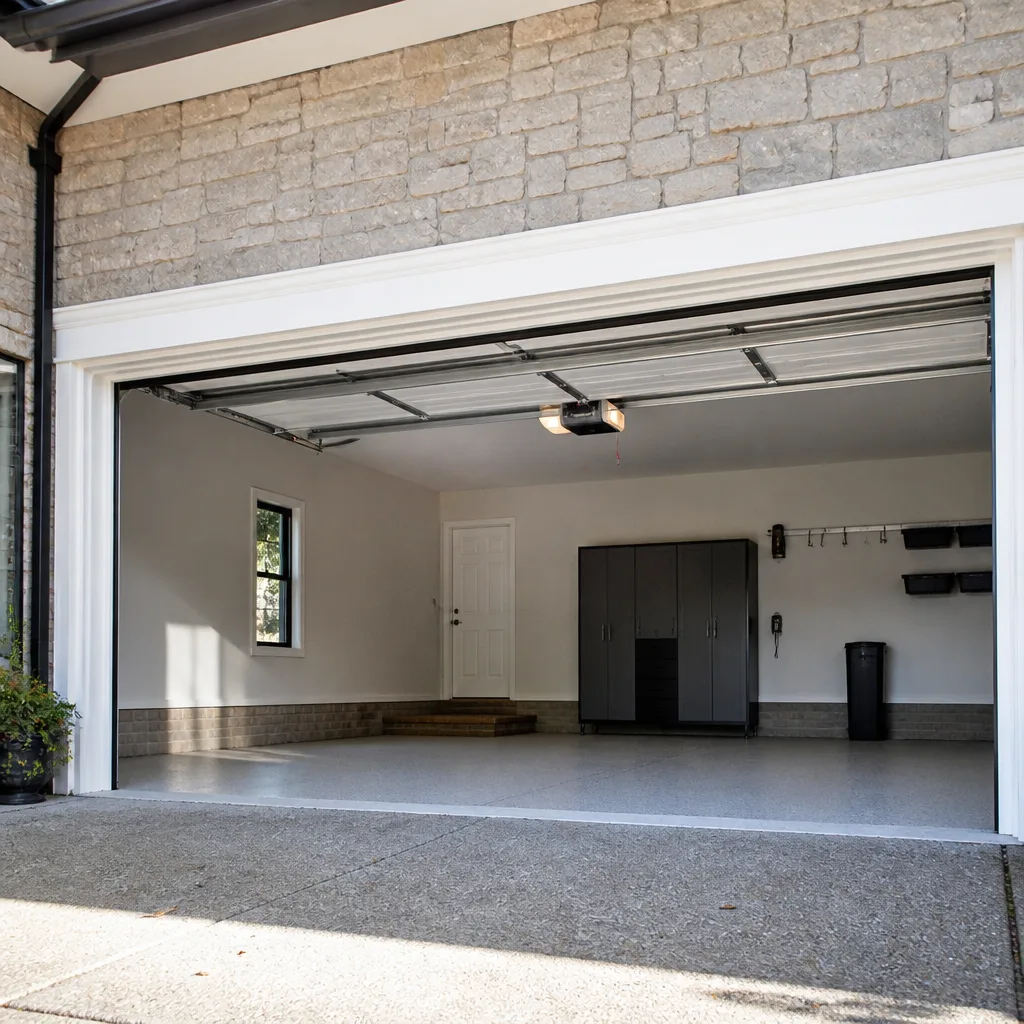 LiftMaster openers
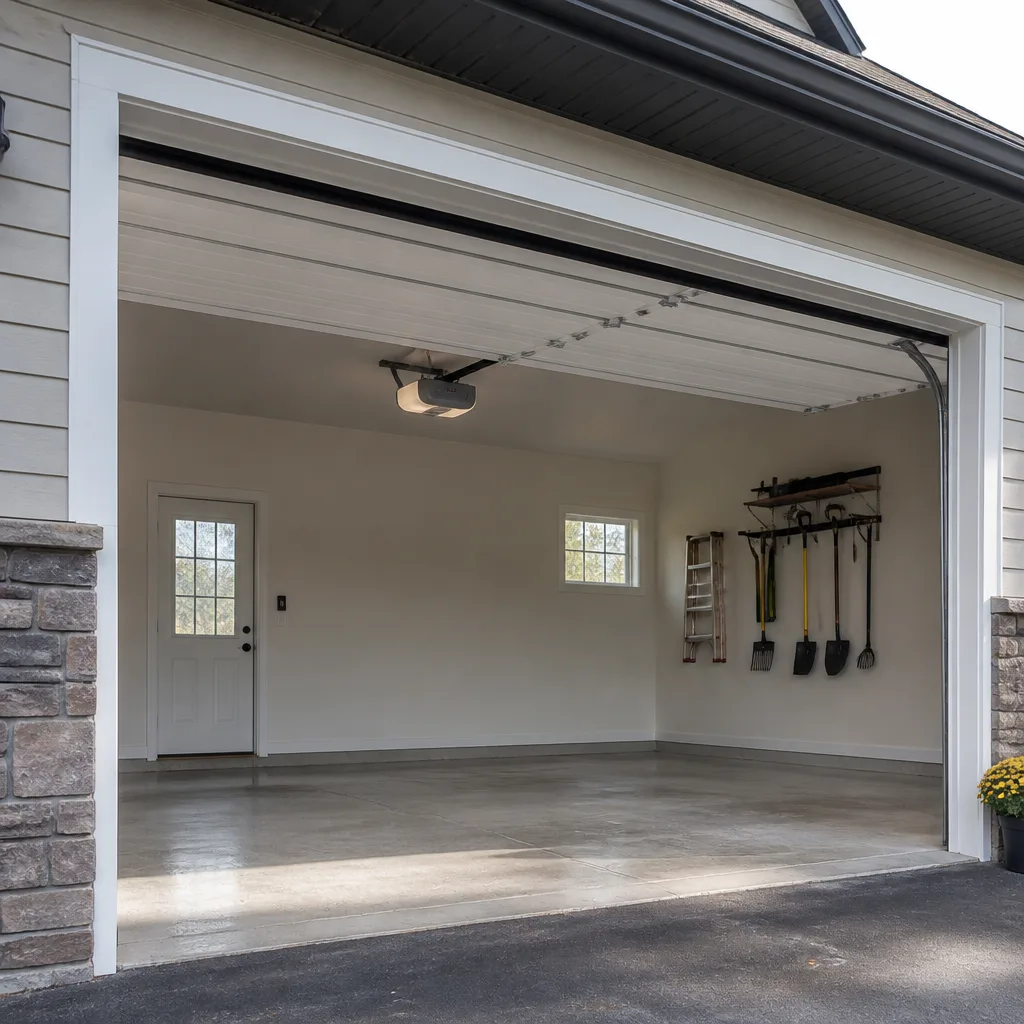 Chamberlain openers
Full 25-point door and opener safety check with every visit - springs, cables, rollers, tracks, and your LiftMaster or Chamberlain opener included
You get a price before we start. It does not change when the pro arrives.
Get your free estimateThe Complete Guide to Garage Doors in Akron
Most Akron homeowners treat their garage door as a single purchase decision. You pick a style, you pick a color, you write a check, and the door quietly does its job for the next couple of decades. That mental model is the reason so many doors fail early. A garage door isn’t one product – it’s a system of interdependent parts: panels, torsion springs rated to a specific door weight, cables, rollers, hinges, tracks, and an opener sized to move the whole assembly. The average door opens and closes well over a thousand times a year, more than any other moving part in your home, yet most people can’t name a single component beyond “the spring.” This guide explains how those parts interact, how Akron’s climate stresses them, and what actually separates a door that lasts twenty years from one that’s sagging in five.
Quick Answer
A garage door lasts decades in Akron when its spring, opener, and hardware are correctly matched to the door’s weight, and when the bottom seal, tracks, and tension are checked before each freeze-thaw season. The biggest failure driver in Akron isn’t wear – it’s mismatch, where a door’s spring rating or opener horsepower doesn’t match the actual weight of the door. Understanding the system, not just the style, is what protects your investment.
Styles & brands we work with
- Raised-panel steel
- Carriage house
- Modern flush
- Full-view glass
- LiftMaster openers
- Chamberlain openers
Table of Contents
- Why a Garage Door Is a System, Not a Single Purchase
- How Akron’s Freeze-Thaw Cycles Wear a Door Down
- Door Weight, Spring Rating, and Opener Horsepower
- What Steel Gauge Actually Means
- Sectional, Roll-Up, and Carriage Doors in Akron Garages
- Reading Your Door’s Nameplate Data
- Why Brand Compatibility Matters for Diagnostics
- A Seasonal Checklist for Akron Doors
Why a Garage Door Is a System, Not a Single Purchase
When a garage door fails, homeowners often point to one part: the spring snapped, the opener quit, the door came off its track. In practice, failures are almost always the result of parts wearing unevenly against each other. A torsion spring loses tension slowly, which forces the opener to work harder, which wears the opener’s gear and logic board, which eventually causes a stall or a reversal. Fix the opener alone and the new unit inherits the same overload.
Think of it as a chain of balance. The door itself has a fixed weight. The springs are rated to counterbalance that exact weight. The opener is sized to lift whatever remains after the springs do their share. The cables, rollers, and hinges guide the movement. Change any one of those and you’ve changed the load on everything else.
Here’s what homeowners should know about each part’s role:
- Panels: the visible surface and the structural shell. Dents and rust weaken the frame that holds the hinges.
- Torsion or extension springs: store the mechanical energy that counterbalances the door’s full weight.
- Cables: connect springs to the bottom brackets and carry the tension. A frayed cable is a genuine hazard.
- Rollers and hinges: the joints that let a sectional door fold. Worn rollers cause dragging and track bind.
- Tracks: the guide rails. Bent tracks force the door off its path and can twist the panels.
- Opener and safety sensors: the force multiplier and the safety cutoff that stops the door on contact.
This is why diagnosis has to come before parts. Replacing a spring without checking the door’s balance and cable condition is a shortcut that usually shows up six months later as a new problem. When we look at an Akron door, we check the whole system and then give a straight answer on cost and repair, not a parts list.
How Akron’s Freeze-Thaw Cycles Wear a Door Down
Akron sits in a climate where winter temperatures routinely swing below freezing and back above it within days. Every one of those swings matters for a garage door, and it’s the single most under-appreciated factor in how quickly an Akron door ages. Three parts take the worst of it.
The bottom seal. The rubber or vinyl astragal along the bottom of the door is what keeps water, snow melt, and cold air out of the garage. Repeated freeze-thaw cycles harden and crack the seal from the inside out. Once it loses its flexibility, meltwater works underneath it and refreezes against the concrete floor, prying the seal further away. A cracked bottom seal is easy to spot but rarely checked, and it’s the leading cause of a wet, cold Akron garage.
Track alignment. Metal tracks expand and contract with temperature. Over many winters, the anchors that hold the tracks to the door frame loosen, and the rails shift slightly out of plumb. The door then drags against one side, the rollers wear unevenly, and the panels start to rub. A door that “sticks a little” in January is often showing you track movement, not a motor problem.
Torsion spring tension. Cold makes steel more brittle and changes the friction inside the torsion tube. Springs that were perfectly matched in fall can feel weak in deep winter because the grease in the bearings has thickened. That extra drag on the opener is a real load, and it’s one of the reasons opener failures cluster in the coldest weeks of the year.
The practical takeaway for Akron homeowners is straightforward: treat the first cold snap as a seasonal checkpoint. A quick inspection of the seal, a listen for dragging on the track, and a balance test on the door catches most of what winter is about to worsen. Our garage door repair work in Akron sees this pattern every year, and the doors that get checked in fall are the ones that don’t need emergency calls in January.
Door Weight, Spring Rating, and Opener Horsepower
This is where most matching mistakes happen, and where a lot of premature failure begins. A garage door’s spring is rated to balance a specific door weight within a tolerance, usually stated on the spring or the door’s documentation. The opener is then rated to lift a specific door weight and size as well. When a spring is replaced with one of the wrong rating, even by a small margin, the door is no longer balanced. That imbalance goes straight into the opener.
What that looks like in practice:
- Spring too weak: the opener lifts more than its share of the door’s weight. The motor runs hot, the gear wears faster, and the door may reverse or stall on the way up.
- Spring too strong: the door wants to rise on its own and the opener fights it on the way down. The safety reversal can trip, and the door slams or doesn’t close fully.
- Opener undersized for the door: a heavy insulated door on an opener meant for a light single-car door is a mismatch that shows up as strain and premature wear, even when the spring is right.
Here’s the rough way to think about matching, in order:
- Weigh the door, or read the weight off the door’s documentation.
- Match the torsion spring’s wire size and length to that weight and the door’s height.
- Confirm the opener’s rated lift capacity covers the door weight, width, and height.
- Test the balance: disconnect the opener and lift the door halfway by hand. It should hold position with little or no drift.
- Only after balance is confirmed, set the opener’s travel limits and force settings.
Akron’s mix of older attached garages and newer builds means plenty of homes have a door that was replaced at some point without re-balancing the springs. If your opener is straining or your door feels heavy, that’s the first thing to check. Springs store dangerous tension, and adjusting or replacing them is not a DIY repair. It’s the reason spring work is a named specialty for us and a job many general contractors decline.
What Steel Gauge Actually Means
When you shop for a new steel door, the conversation often drifts to color, window inserts, and style. The number that actually determines how long the door holds up is the gauge of the steel, and it’s easy to overlook because it’s buried in the spec sheet. Gauge is a measure of thickness, and with steel, a lower number means thicker metal. So 24-gauge steel is thicker and heavier than 27-gauge steel, not the other way around. That inversion trips up a lot of shoppers.
Why does it matter more than the finish? A door’s steel skin is the structural layer that carries panel weight and resists dents. Thicker steel resists the kind of impact a door takes from a bumped car, a stray ball, or an ice chunk, and it holds its shape across the seams where panels meet. Thin steel flexes under load, and that flex works the hinges and rollers harder over the years. In a climate that freezes and thaws, a panel that flexes will also let moisture migrate into seams more easily.
A few practical notes for an Akron buyer:
- A 24-gauge door is a heavier door, which means the spring rating and opener sizing have to be matched up. That’s a plus if it’s done, a problem if it’s skipped.
- A 27-gauge door is a reasonable option for a lightly used door or a detached garage where the priority is cost and light weight.
- Insulation and backer layers often do more for weight and feel than the gauge number alone, so read the full spec, not one line.
- Ask for the gauge in writing. A dealer who can’t state it is a dealer to walk away from.
Color fades and styles date. Gauge and weight are what you’ll still feel in the door ten years from now. When you’re comparing quotes for a new door, this is the spec that separates a door that lasts from one that looks fine in the showroom and disappoints in year five. For projects where the door is being replaced rather than repaired, the garage door installation conversation should always start with the system specs, not the color swatches.
Sectional, Roll-Up, and Carriage Doors in Akron Garages
Akron has a wide spread of garage types: older two-car attached garages with limited ceiling height, detached garages behind the house, and newer homes with deeper bays. The door type that works best depends on the space you actually have, and on whether headroom or aesthetics is the binding constraint. The three common types are sectional, roll-up, and carriage-style, and they’re not interchangeable.
Sectional doors are what most people picture: horizontal panels that fold up along tracks and tuck under the ceiling. They suit a standard attached garage with normal headroom, come in the widest range of styles and insulation levels, and can be built to fit nearly any opening. They’re the practical default for most Akron homes. The tradeoff is that the panels need ceiling clearance for the tracks and the torsion hardware.
Roll-up doors are a single curtain of slats that coils into a compact drum above the opening. They need very little headroom and no overhead track run, which makes them a strong choice for garages with low ceilings, tight side clearance, or where the door is used as a security barrier rather than a design feature. This is the type plenty of Akron commercial and light-industrial properties use, and it’s practical for a detached garage where looks take a back seat.
Carriage-style doors mimic the swing-out doors on old carriage houses, either as true swing doors or as sectional panels dressed to look like them, with decorative hardware and window arrangements. They’re mostly an aesthetic choice, and they’re a popular look on certain Akron streets with older housing stock. The catch is that they’re heavier and cost more, and they need the right spring and opener match to handle that extra weight.
For an attached Akron garage with limited headroom, the practical answer is usually a sectional door sized to fit, or a low-headroom sectional variant, rather than a carriage door that adds weight you have to pay for twice, once in the door and once in the opener. Roll-up is worth considering when headroom is truly tight or the door doesn’t need to match the house. The style choice is real, but the space and weight constraints should make it first.
Reading Your Door’s Nameplate Data
Every professionally installed door carries a nameplate or stamped label, and it’s the closest thing you have to a birth certificate for the door. It tells you the manufacturer, model, and often the door weight or a spring rating reference. Comparing that to what you were sold or told at a service call is how you verify you got what you paid for, and it’s a step most homeowners skip.
Here’s how to read it, in order:
- Find the label – usually on the inside of the top or bottom panel, or on the door’s vertical stile. Open the door and look along the panels and the header.
- Note the manufacturer and model. That identifies the exact product line, which sets its base specs.
- Look for a weight or spring designation. Many Amarr and Clopay doors, for example, carry a spring tag or label that references the door weight the springs were built for.
- Compare what’s labeled to what’s physically on the door: spring wire size and length, and the opener model. Discrepancies are the first thing to investigate when a door misbehaves.
- Photograph the label and keep it with your home records. A future service call or a resale inspection goes faster with it in hand.
What you’re checking is whether the door and its springs are the pair that were installed together. When a door feels heavy or unbalanced, the nameplate tells you what correct looks like, and it keeps any repair honest. If the label says one thing and the spring or opener on the door says another, you’ve found the source of the mismatch. On newer homes and on doors that were replaced by a previous owner, this is the fastest way to know what you’re actually working with. When you want the diagnosis done right, the place to start is often a garage door opener repair call that begins with the door specs, not a new opener.
Why Brand Compatibility Matters for Diagnostics
A garage door and its opener are made by different companies, and each has its own parts, diagnostics, and quirks. That’s why an important early step in any service call is identifying the exact brand and model of both the door and the opener. A technician who knows Clopay’s panel and hinge geometry, Amarr’s steel door lines, or Genie’s opener logic and safety-trip behavior can diagnose a problem in minutes. A generalist who has to look everything up, or who reaches for a generic replacement, tends to fix the symptom and miss the cause.
We work on the brands that actually get installed in Akron garages, so the diagnosis fits the equipment. That includes LiftMaster and Chamberlain openers on the common belt and chain drives, Genie’s logic boards and sensors, and the door side: Clopay and Amarr for steel sectional doors, plus Wayne Dalton and Craftsman for the doors and openers found in a lot of older Akron housing. When a component fails, matching the brand means the right spring rating, the right opener gear set, and the right settings – not a workaround that leaves the mismatch that caused the failure in the first place.
One caution too many homeowners learn the hard way: springs, cables, and bottom brackets are the parts of a garage door system that store real energy and demand specific tools and training. Garage doors are the only trade we do, and part of why we keep that focus is that a spring job done with a generic approach can put a person at serious risk. If the spring is broken or the door is unresponsive, have a trained technician assess it.
A Seasonal Checklist for Akron Doors
A small amount of seasonal care prevents a disproportionate share of Akron garage door failures. You don’t need to become a mechanic, but you should know what to look at and what to leave alone. Use this checklist as a guide for what to watch, not a how-to for repairs – anything involving springs, cables, or the opener’s settings goes to a technician.
- Check the bottom seal in fall. Look for cracks, gaps against the floor, and hardening. Replace it before snow melt finds the opening.
- Listen on the way up and down. Grinding, squealing, or a door that changes speed signals a tension or wear issue. Note when it happens.
- Run the balance test. Disconnect the opener and raise the door by hand to about halfway. It should hold there. If it drops or rises, the spring balance is off.
- Look at the rollers and hinges. Hairline cracks and visible wear in the rollers lead to track bind. Replace worn rollers in pairs.
- Clear the tracks. Wipe the rails clean of grit and debris, and look for bent sections or loose anchors.
- Test the safety sensors and reversal. The door should reverse on contact and stop the moment the sensors are blocked. This is a safety system worth testing every season.
- Once a year, have a professional inspect the springs. Tension and cable condition aren’t a visual DIY check. Springs store dangerous energy, and the right call is to leave this to trained hands.
Akron’s freeze-thaw pattern makes fall the most valuable time for this list, with a repeat check in early spring to catch what winter shook loose. Routine checks are what keep a door system from drifting out of balance between cold snaps, and they make the next service call cheaper because less has gone wrong.
Common Mistakes to Avoid
- Replacing only one spring on a pair. Torsion springs wear together, and a set is normally replaced as a matched pair. A single new spring against a tired one loads the older side unevenly and can shorten the life of the new one.
- Blaming the opener when the door is out of balance. If the springs aren’t carrying their share of the door’s weight, a new opener just inherits the strain. Balance gets tested first, always.
- Ignoring a cracked bottom seal through winter. A gap at the floor is where meltwater and cold air get in, and it refreezes against the concrete in Akron. It’s a small part that protects the whole garage.
- Forcing a dragging door. A door that sticks against one track is telling you the tracks have shifted or the rollers are gone. Forcing it through repeated cycles wears the opener and can damage the panels.
- Shopping on color and style and ignoring gauge and weight. The 24-gauge versus 27-gauge difference determines how the door holds up, and the weight determines the spring and opener match. The color can’t tell you any of that.
- Assuming the door nameplate doesn’t matter. It’s the record of what was installed, and if it disagrees with the spring and opener on the door, you’ve found the cause of a lot of “mystery” failures.
- Letting a spring or cable fail without professional handling. These are high-tension components that can injure a person badly. If a spring is broken, the door is stuck, or a cable is loose, stop and call.
See the difference
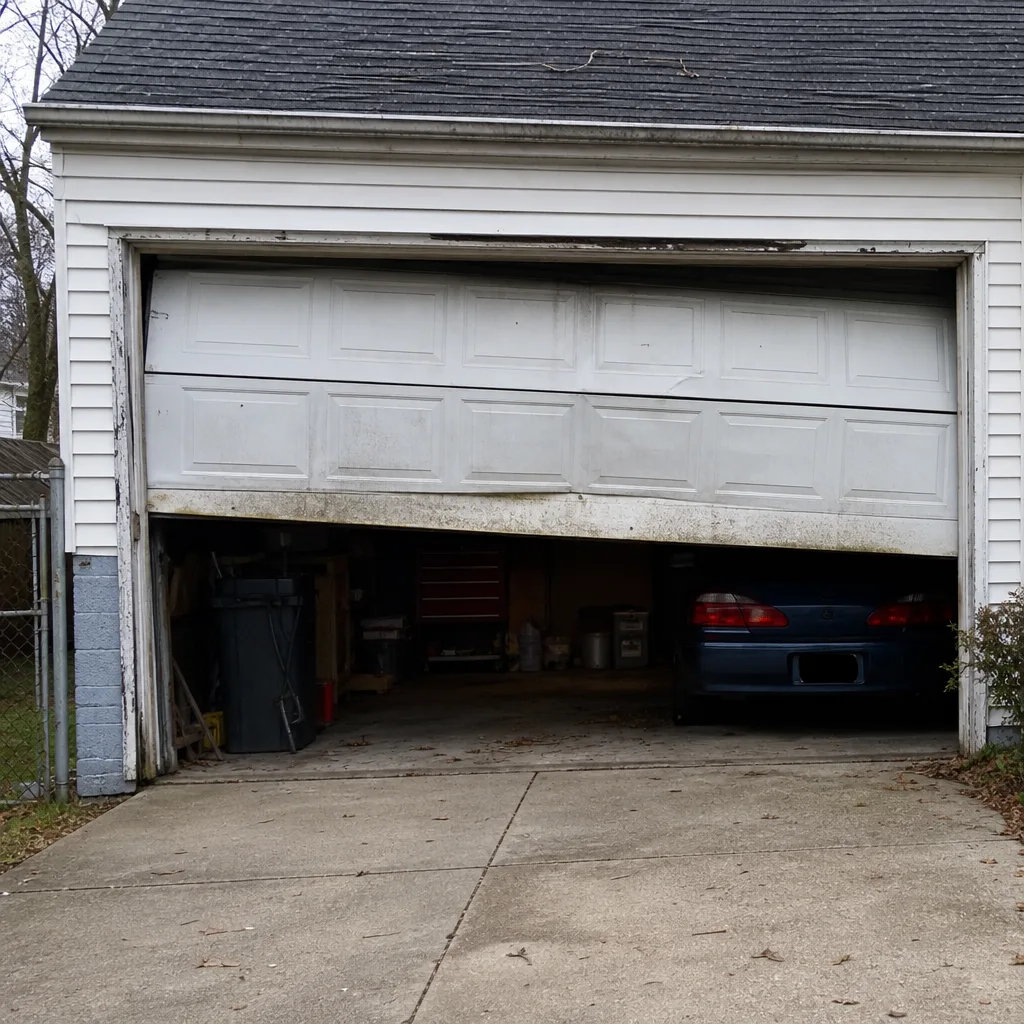 Before
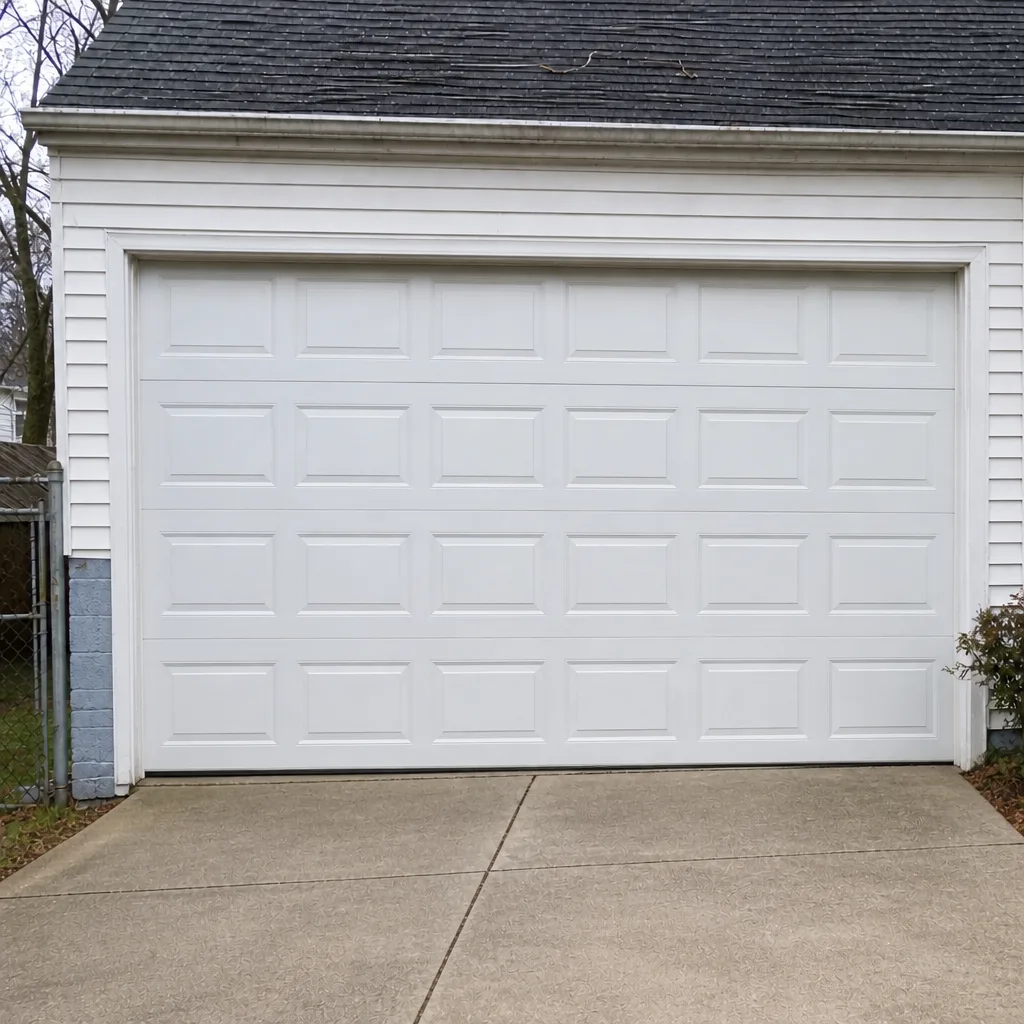 After
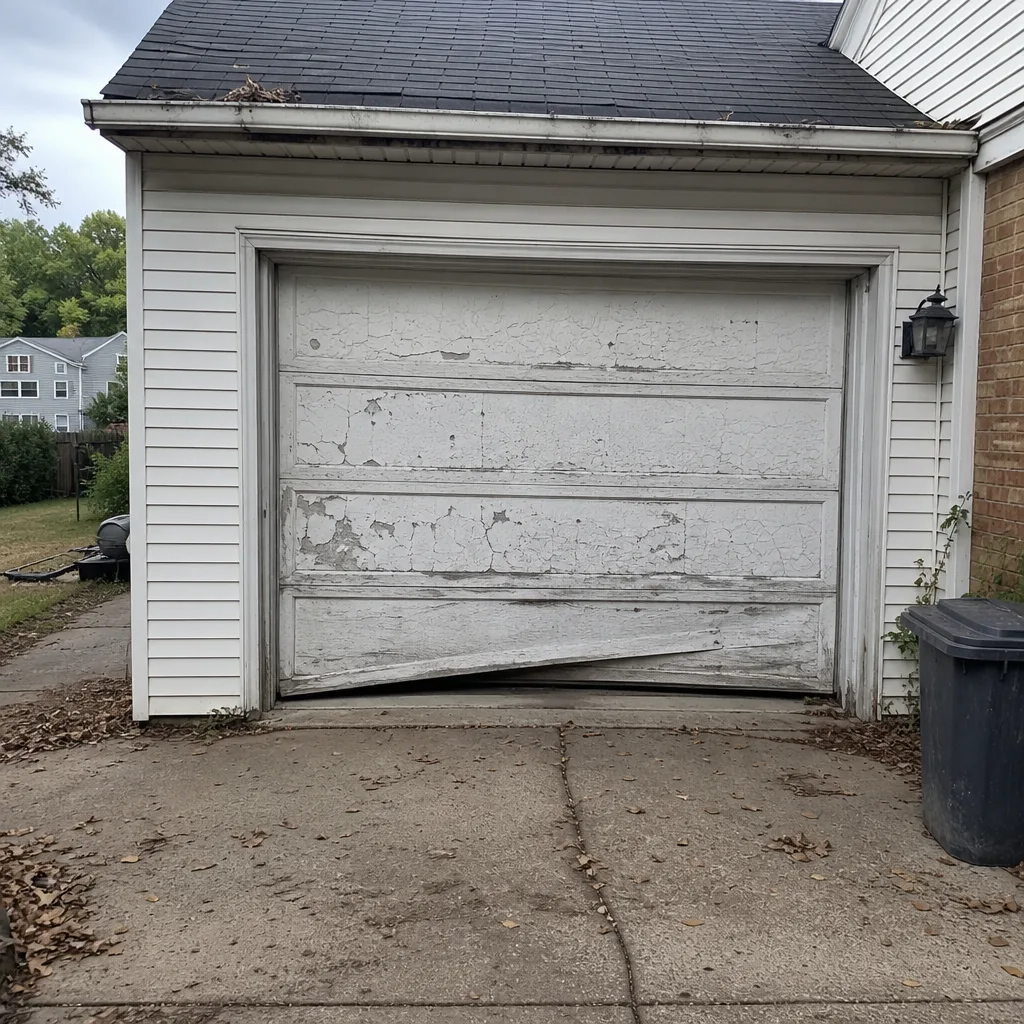 Before
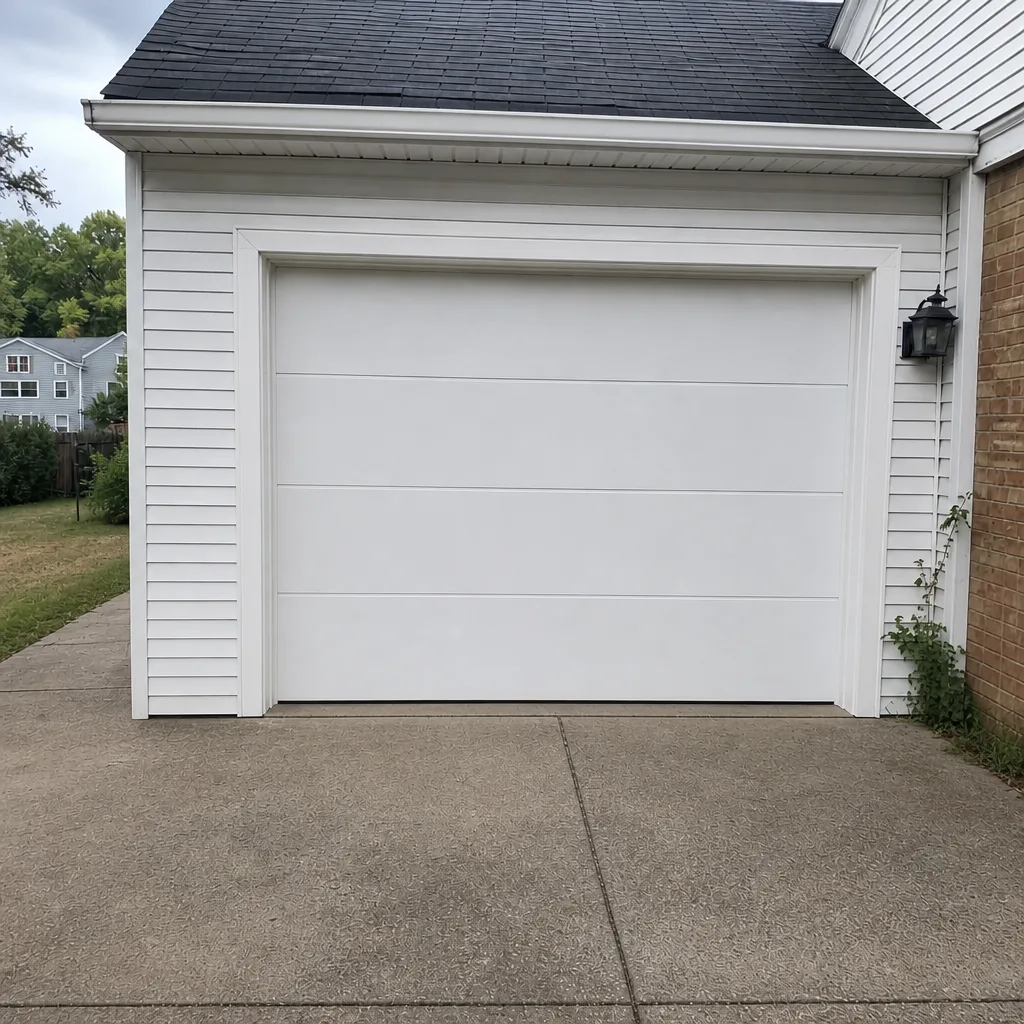 After
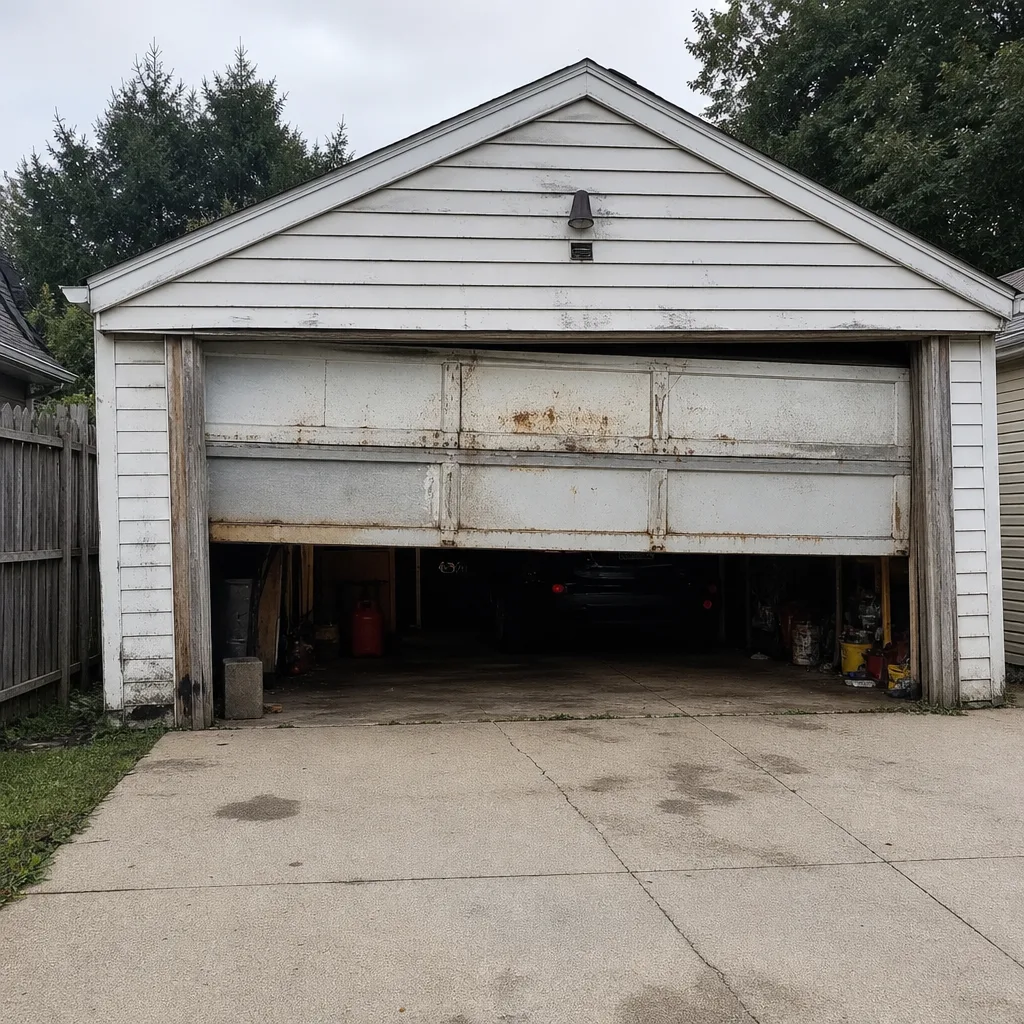 Before
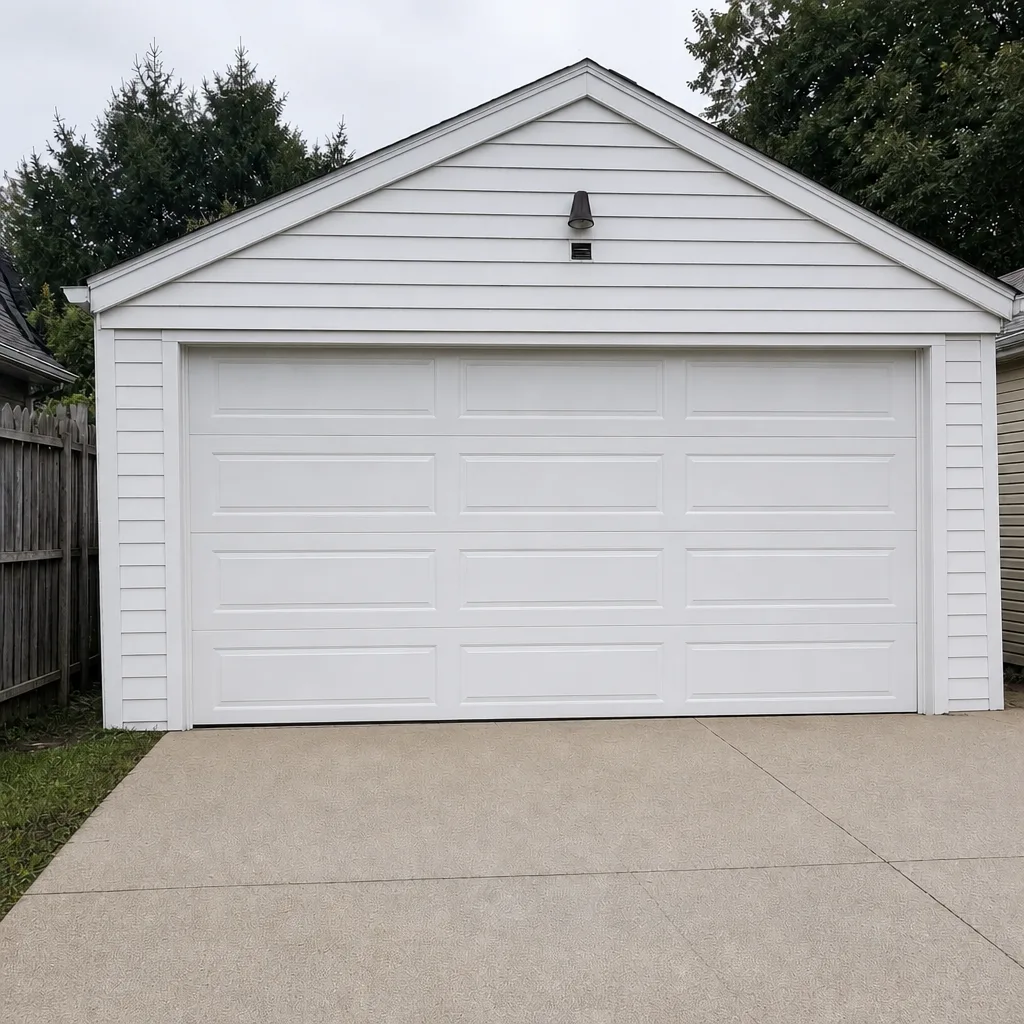 After
When to Call a Professional
Some problems are worth a phone call the moment you notice them. A broken torsion spring, a snapped cable, a door stuck open or closed, a door that comes off the track, or anything that leaves your home or car inaccessible needs trained hands. On the opener side, a unit that hums without moving, trips its safety reversal at random, or won’t respond to the remote after resetting is often a logic or sensor problem that needs the right diagnostic. Akron’s freeze-thaw winters make door failures more likely, so a seasonal inspection is worth it too. The key rule is simple: springs, cables, and anything involving high-tension energy or electrical opener work should never be a homeowner repair. A generalist who “does everything” tends to miss the brand-specific cause. As a company that does garage doors only, we offer free estimates in Akron – call (855) 658-4360.
Frequently Asked Questions
Garage door repair in Akron depends on the part and the door system, and you get a written estimate before work starts. Spring, cable, and opener repairs are the common jobs, and the price is quoted and agreed up front, not revised after the work is done. Call (855) 658-4360 for an exact quote – estimates are free.
Emergency garage door service is an offered service, so call us when access to your home or vehicle is blocked. We’ll tell you what’s possible for the day and book the job from there, and the technician diagnoses the cause before quoting the fix. Call (855) 658-4360.
Cold weather changes steel friction and spring feel, so a door that was balanced in fall can feel weak or heavy in deep winter. That’s also when opener failures cluster, because the opener is working harder. A seasonal inspection of the springs, tracks, and seal catches most of this. Call (855) 658-4360 if the door feels heavy or reverses.
No, matching springs are normally replaced as a pair. A new spring working against a worn one loads both unevenly, and springs are a high-tension part that should be matched to the door’s weight. Ask for a pair when the spring job is diagnosed. Call (855) 658-4360 for an exact quote.
24-gauge steel is thicker and heavier than 27-gauge, and the gauge matters more for long-term durability than color or style. Heavier steel resists dents and holds its shape across panels, but it also needs the right spring rating and opener sizing. Whatever the dealer sells, get the gauge in writing and have the system matched. Call (855) 658-4360 for a free measure and a written price on a new door.
The local professional we connect you with is licensed and insured as the state requires, and the diagnosis comes before any work. Our technicians have up to 10 years of experience, and we work on the brands installed in Akron homes: Genie, Clopay, Amarr, and Wayne Dalton, plus LiftMaster, Chamberlain, Craftsman, and Raynor. Call (855) 658-4360 for an exact quote – estimates are free.
The Bottom Line
Your garage door is a system, and it only works well when its parts are matched to each other and to the door’s actual weight. In Akron, freeze-thaw cycles wear the bottom seal, shift the tracks, and change the feel of the springs every winter, so a seasonal check does more to prevent failure than any single repair. Buy doors on gauge and weight, not on color. Read the nameplate and verify the install. Skip the DIY on springs and cables. The doors that last twenty years aren’t lucky; they’re just matched, maintained, and diagnosed by someone who works on that system every day.
Contact Us
If your door is straining, sticking, or won’t move at all, we’re ready to take a look. Reach out to the Akron Garage Door Repair Pros for a free estimate and a straight answer on what your door needs. Call (855) 658-4360 today, and we’ll diagnose the system before we quote the fix.
Written by the team at Akron Garage Door Repair Pros.