Last updated November 20, 2026
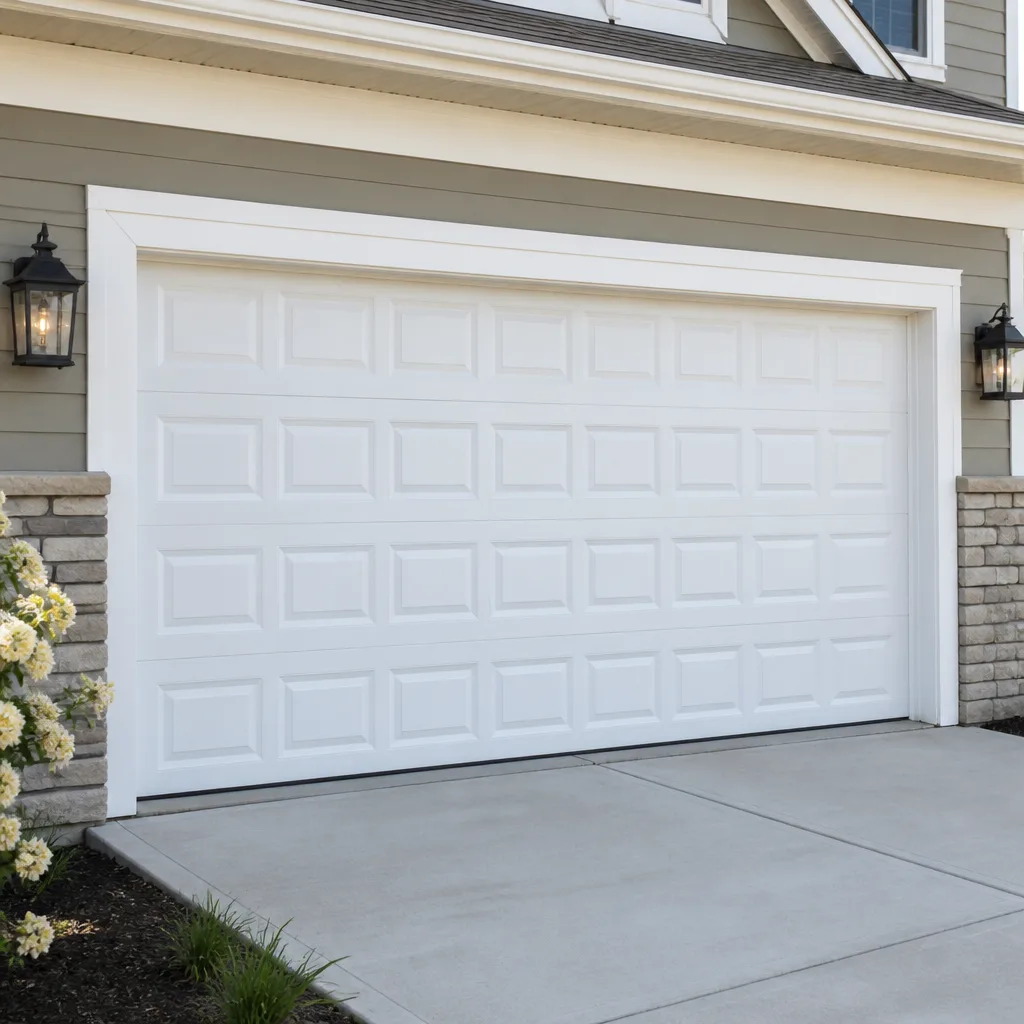 Raised-panel steel
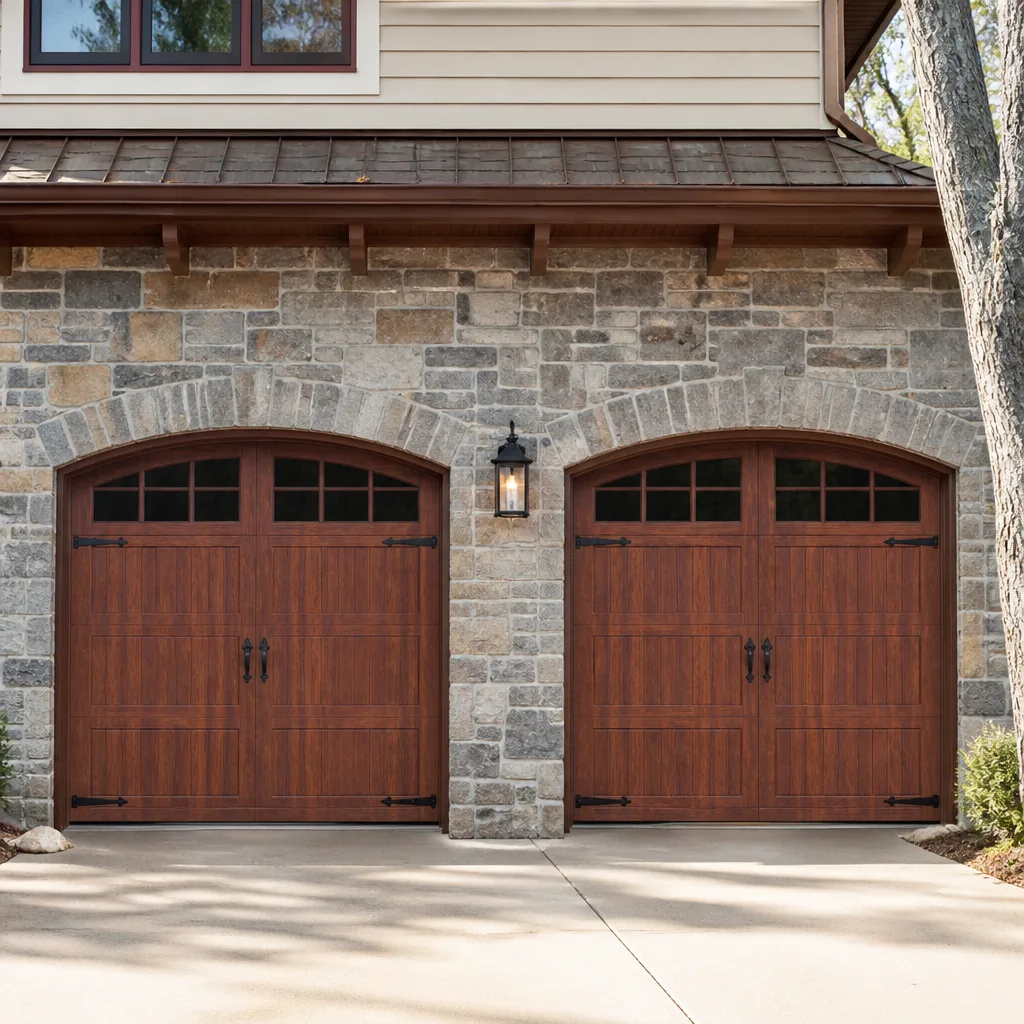 Carriage house
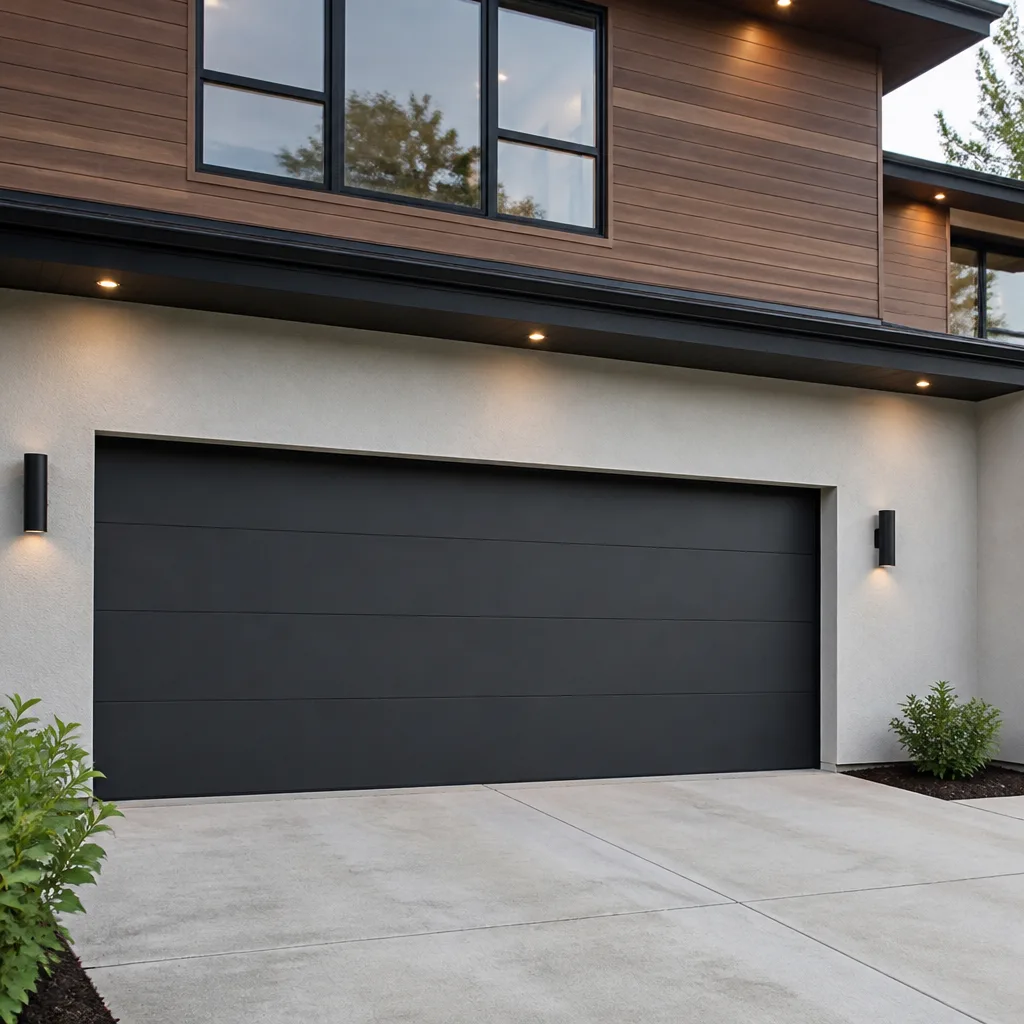 Modern flush
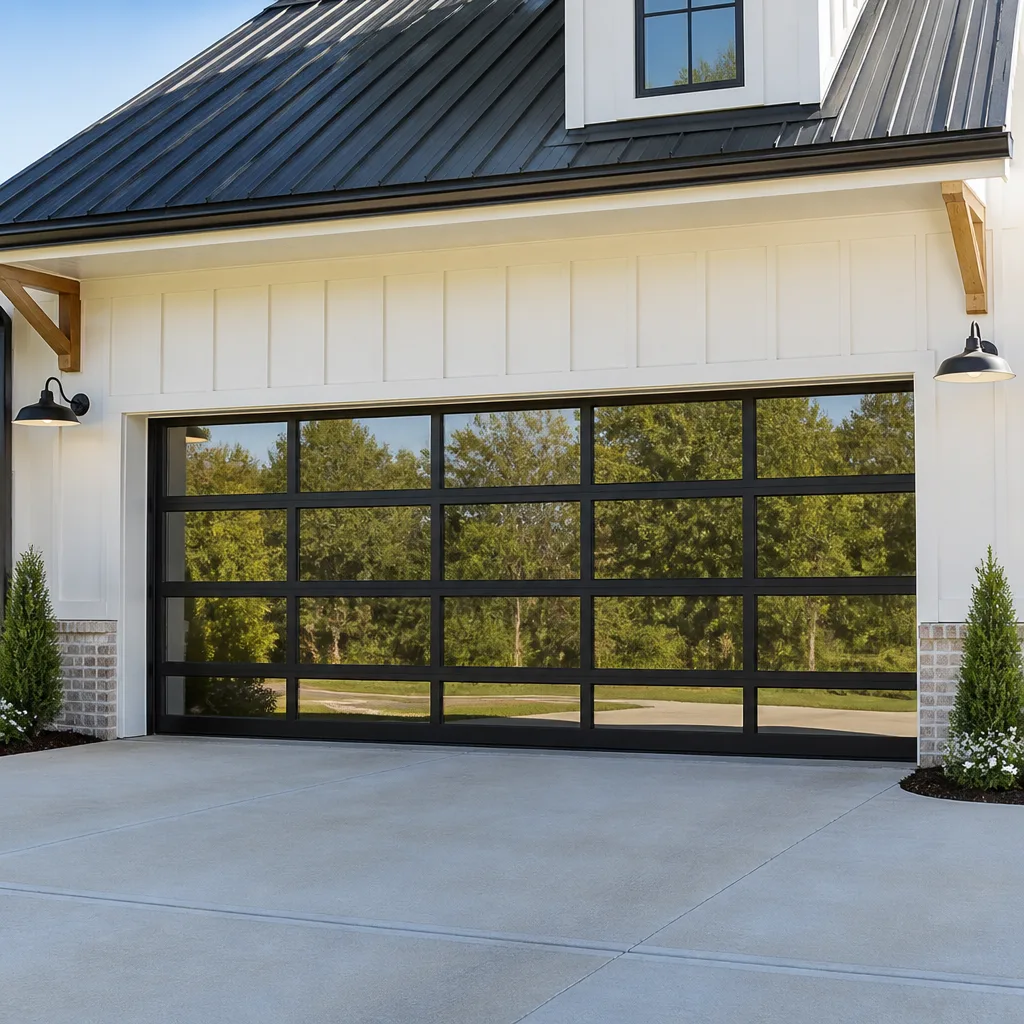 Full-view glass
 LiftMaster openers
 Chamberlain openers
Full 25-point door and opener safety check with every visit - springs, cables, rollers, tracks, and your LiftMaster or Chamberlain opener included
You get a price before we start. It does not change when the pro arrives.
Get your free estimateDIY vs Professional Garage Door: The Akron Homeowner’s Decision Guide
Most homeowners who get hurt working on a garage door were being careful. That’s the part people miss. Torsion springs store enough energy to break a wrist or crack a skull when released unexpectedly, and a YouTube tutorial filmed in a clean, controlled shop doesn’t replicate what’s actually in your Akron garage in February: cold steel, a door that’s been cycling through freeze and thaw, bolts that haven’t moved in years. The question isn’t whether you’re handy. It’s which specific jobs carry mechanical risk that makes self-repair dangerous no matter how skilled you are, and which ones are genuinely fine for a homeowner to handle. This Akron guide sorts every common garage door task into one of those two buckets, and explains the physics, the warranty math, and the real cost of getting it wrong.
Quick Answer
Lubrication, safety sensor alignment, remote programming, and visual inspections are homeowner tasks. Torsion and extension spring replacement, cable replacement, and track realignment are not, because each involves stored mechanical energy or sudden load release that can cause serious injury. Professional help in Akron is usually worth it for anything touching springs, cables, or the door’s balance, and a typical service call costs less than the emergency room visit a DIY spring job can produce.
Styles & brands we work with
- Raised-panel steel
- Carriage house
- Modern flush
- Full-view glass
- LiftMaster openers
- Chamberlain openers
Table of Contents
- The Real Divide: Mechanical Risk, Not Skill Level
- Task-by-Task: What You Can Do and What You Shouldn’t
- The Physics of Torsion Spring Failure
- Why DIY Panel Replacement Rarely Works
- The Warranty Risk Nobody Mentions
- When DIY Costs More Than Professional Repair
- Akron Conditions That Change the Equation
- How a Professional Diagnosis Actually Works
The Real Divide: Mechanical Risk, Not Skill Level
The DIY vs professional conversation usually gets framed wrong. People ask “am I capable of this?” when the better question is “does this task forgive a mistake?” For a garage door in Akron, the answer depends entirely on whether the component in question is holding stored energy or not. A garage door system is a balance of forces: torsion springs or extension springs counterweight a door that typically weighs well over a hundred pounds, cables transfer that force to the bottom corners, and the tracks just guide the door along its path. If you touch a component holding energy, a mistake doesn’t mean “the door doesn’t work.” It means the energy releases somewhere, quickly, and often toward the person standing under it.
That distinction matters more than experience. A homeowner who has replaced engines, wired a basement, and rebuilt a deck can still get hurt on a torsion spring because the risk isn’t a knowledge gap. It’s a physical one. The spring doesn’t care how careful you are. It cares whether the winding bars are seated, whether the set screws are tight, and whether the door’s weight is balanced before you start.
Garage doors are all we do, and in our experience the jobs that send people to the hospital are almost never the ones they expected. Nobody gets hurt changing a remote battery. People get hurt assuming a spring “looks fine” and giving it one more turn.
- Stored-energy tasks (springs, cables under tension): professional only.
- Load-bearing tasks (track realignment, roller replacement, hinge swaps on a balanced door): professional recommended.
- Low-risk maintenance (lubrication, sensor alignment, remote programming, visual checks): homeowner appropriate.
Task-by-Task: What You Can Do and What You Shouldn’t
Here’s the practical classification. If you only read one section of this guide, make it this one.
Homeowner-Appropriate Tasks
- Lubricating hinges, rollers, and springs. A garage door benefits from lubrication on the moving metal parts a couple of times a year. Cold Akron winters dry out lubricant faster, so late fall is a good time to do it.
- Aligning safety sensors. If the door reverses on its own or won’t close, the photo-eye sensors probably aren’t seeing each other. Straightening them or wiping off dust is safe and simple.
- Programming remotes and keypads. Every opener brand has a pairing procedure. LiftMaster, Chamberlain, Genie, and Craftsman all use slightly different sequences, but none involve touching the door mechanism.
- Visually inspecting the door monthly. Look for frayed cables, gaps in the spring, dents in the track, and rollers that have come out of their brackets. You’re not fixing anything here, just noticing.
- Testing the auto-reverse. Put a piece of wood flat on the floor under the door and confirm it reverses on contact. This is the single most important safety check a homeowner can do.
- Clearing obstructions. Small branches, snow, or debris in the track is a safe removal. Anything bigger than that is a diagnosis.
Professional-Only Tasks
- Torsion spring replacement. High tension. Winding and unwinding requires specific tools and a specific sequence. Not a homeowner job.
- Extension spring replacement. Lower tension than torsion but still stored energy. Same rule.
- Cable replacement. Cables are only safe to touch when the door is fully up with springs relaxed. Getting the door into that state safely is the professional part.
- Track realignment. Bending a track back requires knowing what the door’s true path should be. Get it wrong and the door fights its own hardware for years.
- Bottom bracket and drum replacement. The bottom bracket is where the cable attaches under load. It is one of the most dangerous parts on the entire door.
- Opener replacement. An opener swap involves the door’s balance, the rail, the header bracket, and the safety reverse setup. One mistake and the opener pulls a door out of alignment.
If you’re going to try something off the second list anyway, call us first. We’ll tell you honestly whether it’s something we’d talk a homeowner through or something where we’d rather you just book the service.
The Physics of Torsion Spring Failure
A torsion spring isn’t just a coil. It’s a beam of steel wire under a specific, calculated torque that offsets the weight of a door. To hold a typical double-car door up, the spring is wound dozens of times during installation, distributing twisting force along its length. That force is present every moment the door is closed. It’s what the spring is for. It’s also what makes it dangerous.
Think of it this way: the spring contains enough stored energy to lift a door that weighs well over a hundred pounds, which means it’s also capable of accelerating small metal parts and lengths of broken wire to speeds that will do real damage to anything in their path. When a torsion spring snaps, it doesn’t gently fail. It releases all that stored torque at once. The most common injuries we hear about are hands, wrists, and faces of people standing on a ladder under the spring, holding a winding bar.
The variables in your Akron garage make an already risky job worse. Cold winters mean metal that’s more brittle. Humidity swings in spring and fall can encourage rust on the wire, which creates a stress riser where the spring eventually breaks. A spring that’s been cycling for a decade may be close to its rated cycles but still look completely intact. There’s no visible warning before a failure.
This is a category of risk, not a matter of being careful. That’s the part DIY tutorials don’t communicate. If you watch someone wind a spring in a shop on a warm day with a fresh door, you’re watching a version of the job that doesn’t match the one in your driveway.
Torsion and extension spring work is a named specialty for us. When a spring breaks in Akron, we schedule the repair as its own job, not bundled with an opener tune-up, because the tension release needs to be handled before anything else on the door is even inspected.
Why DIY Panel Replacement Rarely Works
Panel replacement looks like the most approachable garage door task on the list. Unscrew the section, slide it out, slide the new one in. What could go wrong?
Matching, mostly. A garage door panel has to match three things at once: the gauge of the steel, the finish and profile of the neighbors it sits next to, and the insulation value of the door as a whole. Gauge and profile are tied to a specific manufacturer’s specific line, and lines get redesigned or discontinued. If your Akron home has a door installed a decade ago, there’s a real chance the exact panel profile doesn’t exist anymore. Brands like Amarr, Wayne Dalton, and Raynor have long-running models, but runs end. Colors fade. A ten-year-old panel on the sunny side of the house won’t match a brand-new one out of the box even if they’re the same part number.
There’s also the matter of load transfer. A panel isn’t a standalone piece of sheet metal; it’s part of the door’s structural system. Each section carries its own weight through hinges and rollers into the track. Pull a panel out of a balanced door without first supporting it correctly and the door can bind, half-fall, or wrench a hinge. Getting the new panel in is only half the job. Getting the door back into balance is the other half.
When the panel can’t be matched, the realistic options are a custom-finish panel, a full door replacement, or a complementary color scheme that doesn’t try to match the faded side. All three are worth pricing against a mismatched panel that will look off from the curb. That’s the kind of thing careful diagnosis catches before you order a part you can’t return.
The Warranty Risk Nobody Mentions
Here’s the part most DIY guides skip entirely. Most garage door opener manufacturers require installation by a licensed technician to keep the labor warranty intact, and several void coverage for damage caused by homeowner installation outright. That’s not a scare tactic. It’s a contract term.
The pattern is consistent across the major brands. LiftMaster, Chamberlain, and Genie all publish warranty terms that distinguish between the unit’s parts warranty and the labor to install or repair it. Parts coverage usually stays in place. Labor coverage is often conditioned on professional installation. If a DIY opener install damages the door’s balance and the opener burns out a gear as a result, the failure is on you, and the warranty may not cover it.
Springs aren’t much different. Torsion springs carry cycle ratings from their manufacturer, and the warranty is tied to proper installation. A spring that fails early after a homeowner winds it is a warranty claim the manufacturer can reasonably decline. If you’d like the spring repair, opener service, or installation backed by its original coverage, the work needs to be done by someone the manufacturer recognizes.
This is where garage door opener repair and installation become a warranty question, not just a convenience one. The money you save on a DIY install is often less than the labor you pay for later when a warranty claim gets declined.
When DIY Costs More Than Professional Repair
The cost math on DIY garage door work breaks down into three parts, and most homeowners only consider the first one. Here’s the honest comparison.
Parts Cost: Retail vs Contractor
A torsion spring purchased retail at a hardware store or online usually costs more than the same spring sourced by a garage door company, because contractors buy through supplier channels. The gap isn’t enormous on a single spring, but it exists. Winding bars, safety cables, and the correct bottom brackets add up, and if you use them once they’re a one-time expense that disappears into a toolbox you’ll never touch again. Retail springs also carry a shorter warranty than the ones a specialist installs.
Hidden Costs of a DIY Mistake
- Second service call. A DIY repair that leaves the door out of balance usually requires a pro to redo the job from the start, costing more than hiring them in the first place.
- Collateral damage. A mis-tightened set screw or an over-bent track damages adjacent hardware that was previously fine. The repair bill now covers two problems.
- Warranty loss. As above, a DIY install or repair can void the labor warranty on the door system or opener, which shifts future failures onto your own dime.
- Injury. The one that’s genuinely expensive and sometimes permanent.
Typical Akron Service Ranges
In our experience, most professional garage door work in the Akron area falls into these general ranges. Every job is quoted individually; the written estimate sets the final price, not this table.
- Service call and diagnosis: $75 to $150, often credited toward the repair.
- Torsion spring replacement, one spring: $180 to $340. A matched pair is usually replaced together and costs about twice that.
- Extension spring replacement, one spring: $120 to $250.
- Cable replacement: $150 to $300 per side.
- Roller replacement: $100 to $220 for all rollers.
- Opener repair: $120 to $320 depending on the part.
- Opener replacement: $350 to $800 installed.
- Track realignment: $150 to $400.
Retail parts prices plus shipping plus a second call, in most of these cases, land you at or above the professional range. Add the downtime and the injury risk and it stops being close.
Akron Conditions That Change the Equation
Risk assessment for a garage door isn’t the same in Akron as it is in Phoenix or Miami. The local climate and housing stock shift the math in a few specific ways.
Winter brittleness. Steel that’s seen weeks of freezing temperatures behaves differently than steel in a heated shop. Cables lose flexibility, springs become more prone to snapping rather than stretching under stress, and the metal around the bottom bracket can develop micro-cracks. A repair that would be routine in July carries more risk in January.
Road salt. Akron’s winter roads get treated heavily, and the salt spray that ends up on a car also ends up on the bottom of your garage door and its tracks. Left alone, it accelerates rust on the bottom panel, the hinges, and the cable fittings. Regular lubrication helps, but it doesn’t undo corrosion that’s already set in, and a rusted bottom bracket is a professional job.
The valley effect. Akron sits in a rolling valley with pockets of cold air that hang in neighborhoods from the Merriman Valley down through Kenmore, and the freeze-thaw cycle there runs longer than it does at higher ground. That cycle is hard on springs, tracks, and door seals. It’s also the reason a garage door in Akron can be three years old and already show more wear than one in a milder climate.
Older housing stock. Many homes in Akron’s established neighborhoods, Highland Square, Wallhaven, Firestone Park, and Goodyear Heights among them, have garages built decades ago, sometimes with doors that were already old when the house was new to the family. Panel matching gets harder every year those doors age. Wiring for openers is often original and sometimes undersized.
Historic districts. Some Akron neighborhoods have design guidelines for garage doors visible from the street. A DIY replacement that doesn’t respect them can create a problem that goes beyond a warranty claim.
The neighborhood-by-neighborhood variation is real. A job that would be straightforward in one part of town can present differently three miles away based on nothing but the door’s age and the local climate exposure.
How a Professional Diagnosis Actually Works
Diagnosis first, then a straight answer on cost and repair. That’s the order of operations for a professional garage door visit, and it’s worth knowing what happens so you can compare it against what a DIY attempt would cover.
- Visual inspection of the whole system. Not just the thing that broke. Springs, cables, drums, hinges, rollers, tracks, bottom bracket, and the opener’s rail and mount. One problem often causes another.
- Manual operation test. The technician disconnects the opener and lifts the door by hand to check the balance. A well-adjusted door should lift easily and stay put at half height. If it doesn’t, the spring tension is wrong and nothing else gets fixed until it is.
- Safety reverse and sensor test. Verified on every visit, not just when the customer complains. This is the one check that catches a door that’s about to become dangerous.
- Opener diagnosis. If the problem is the motor, we identify the brand and model and check the specific failure pattern for that unit. Being factory-familiar with LiftMaster, Chamberlain, Genie, Craftsman, and the rest means we’re fixing your actual opener, not applying a generic workaround.
- Written estimate. Before any work starts. The price is quoted and agreed up front. If we open a door and find something the inspection missed, you hear it before the repair gets more expensive, not after.
That last point is the one homeowners ask about most. The written quote is the price. There’s no surprise invoice.
When the diagnosis points to something bigger, repair may not be the answer. If the door has reached the end of its structural life or the cost of fixing it approaches the cost of replacing it, garage door installation is worth pricing in the same visit. That’s not a pitch. It’s the honest math we walk through with Akron homeowners every week.
Common Mistakes to Avoid
- Trying a spring repair on a ladder alone. If the winding bar slips or the set screw doesn’t hold, there’s no one to call for help and nothing between you and a broken spring. This is the mistake that produces the injuries we hear about most.
- Assuming a new spring and a re-tensioned old spring are interchangeable. A spring that’s been stretched, or one that’s been wound one too many times by a homeowner, doesn’t hold the same rating. Springs are ordered by door weight and cycle count.
- Bending a track back without checking the door’s alignment afterward. The track might look straight from the driveway, but if the door’s true path has shifted, every roller on that side will wear faster. Alignment gets checked, not eyeballed.
- Buying a replacement opener without confirming the door is balanced. A new opener installed on an unbalanced door will pull the door against its will and burn out faster than the old one did. Balance first, opener second.
- Matching a panel by color swatch alone. Color is one of three variables. Gauge and profile matter just as much, and neither shows up on a web photo. Akron’s older doors make this mistake especially likely.
- Skipping lubrication through Akron winters. Cold weather dries out hinge and roller lubricant faster. A dry door works harder, which shortens spring life. Late fall and early spring are both reasonable times to reapply.
- Assuming a declining garage door opener is the door’s fault. Sometimes the opener is fine and the door is binding. Diagnosis has to happen before any replacement gets ordered.
- Ignoring aesthetic guidelines in Akron historic districts. A perfect functional install can still run into a neighborhood review problem. Worth checking before the panel gets ordered.
When you’re not sure which category a problem falls into, garage door repair starts with a diagnosis. We’d rather tell you it’s a homeowner fix than charge you for a visit that didn’t need to happen.
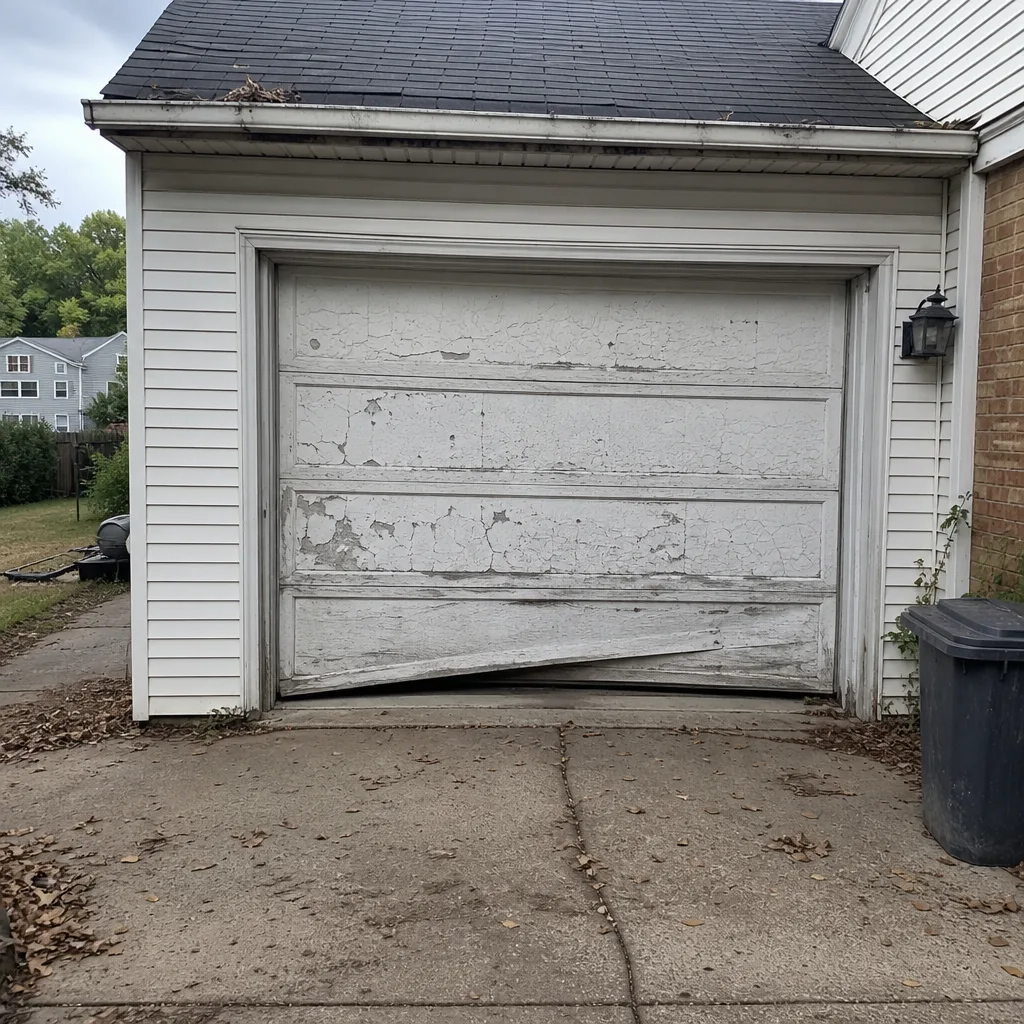
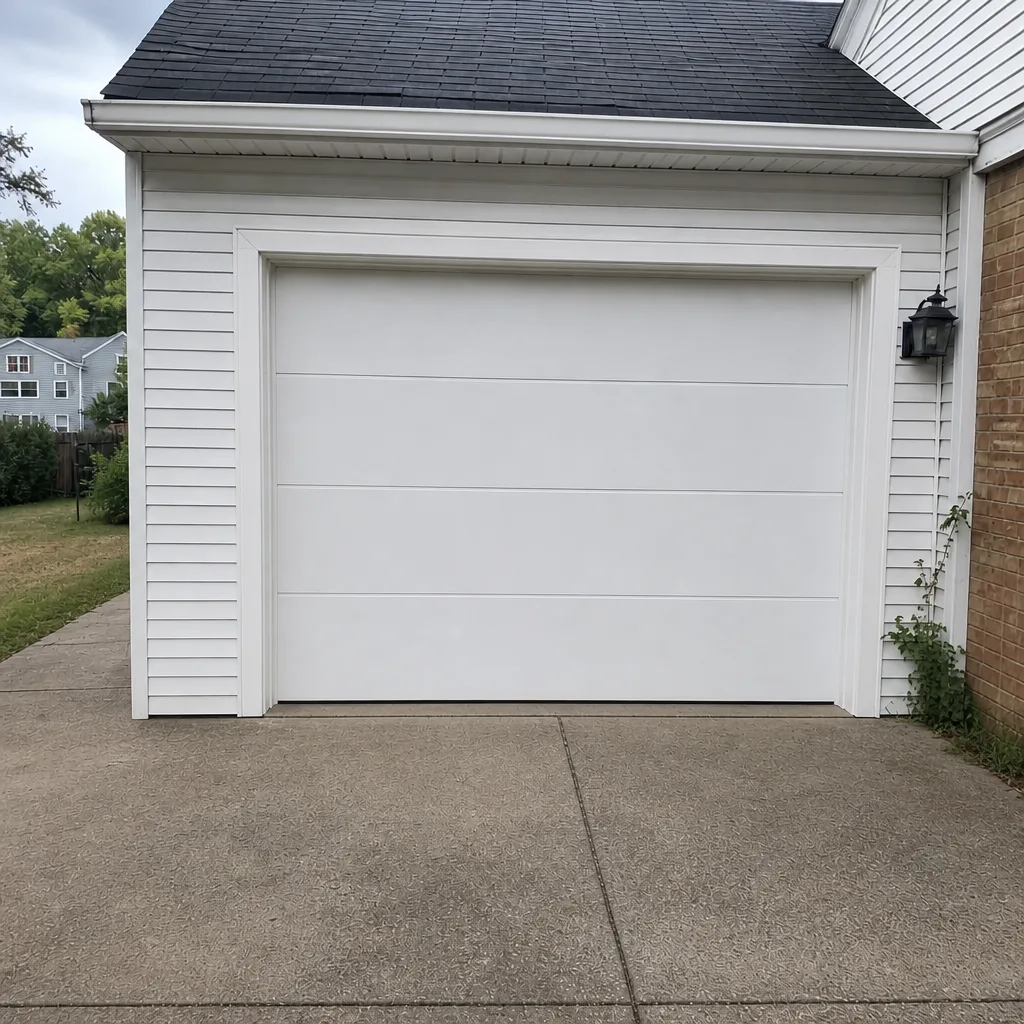
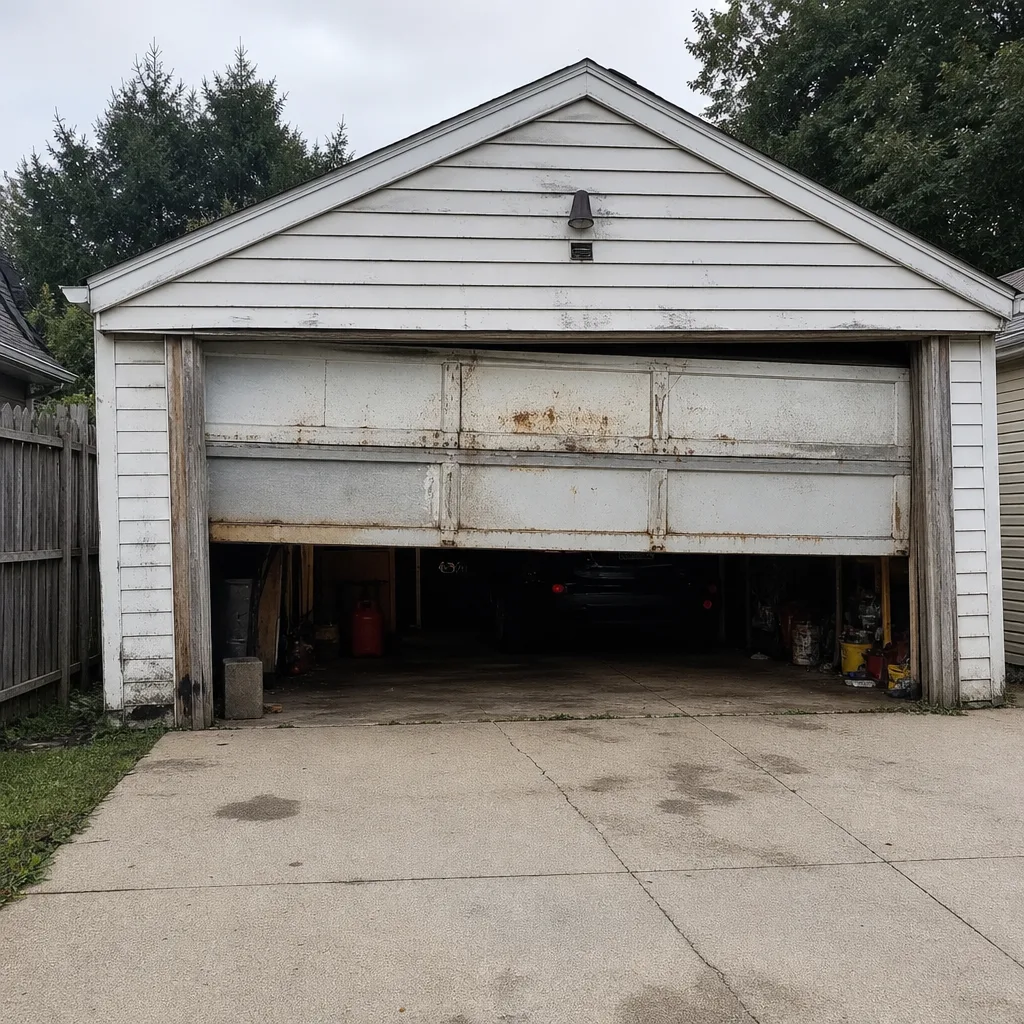
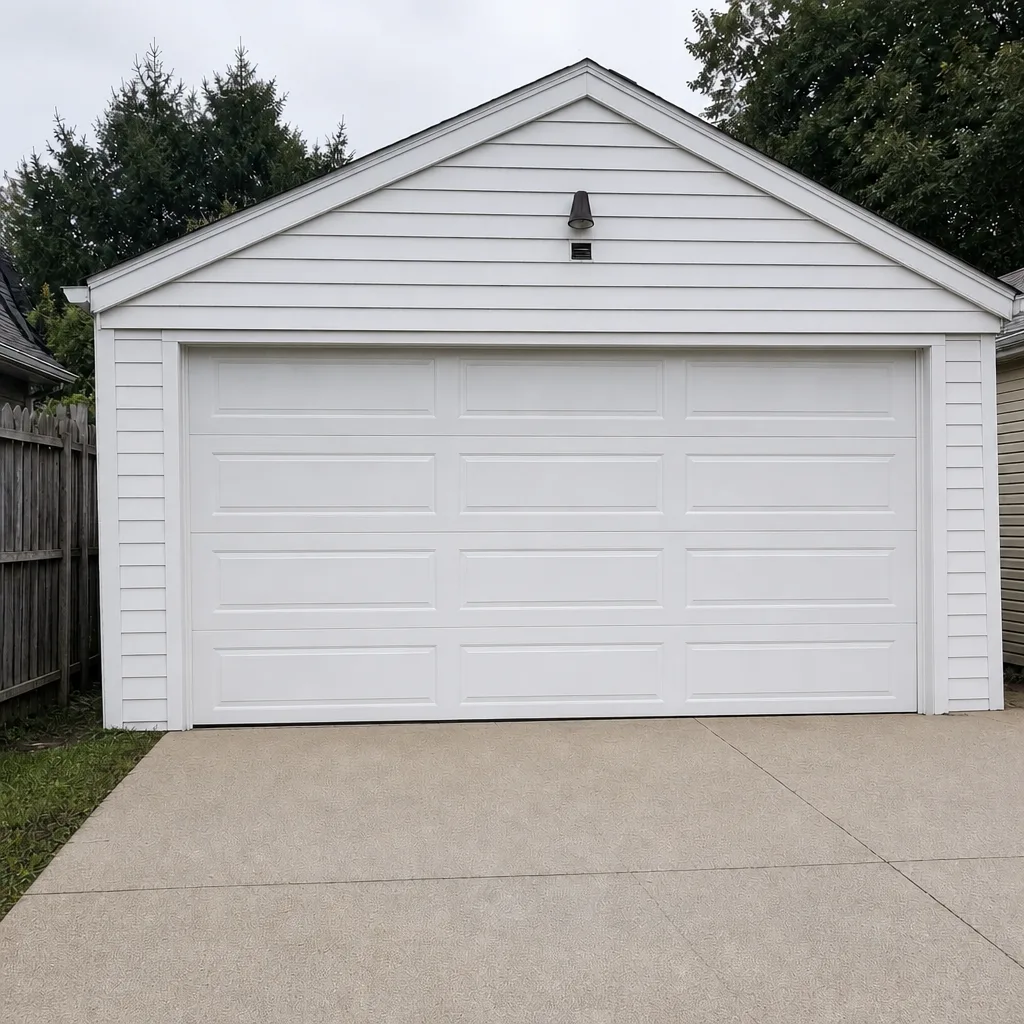
See the difference
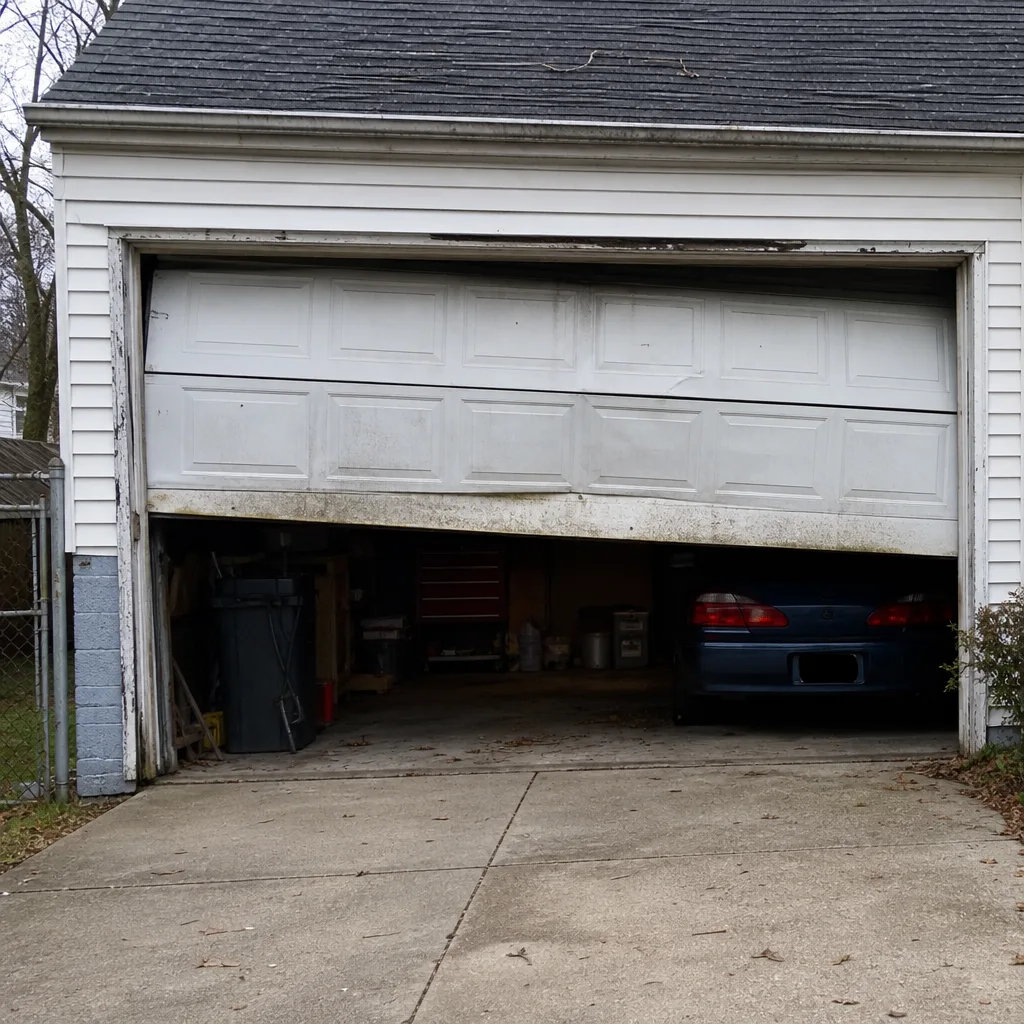 Before
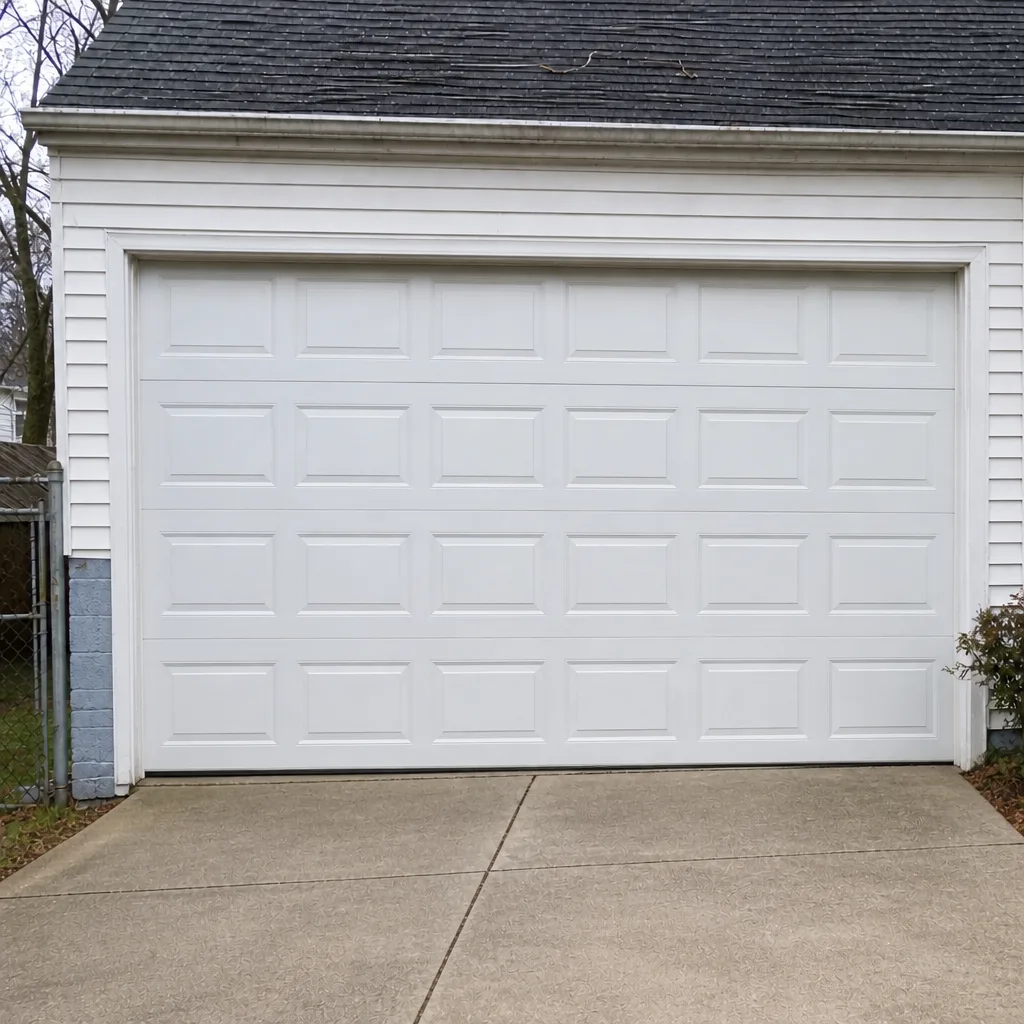 After
 Before
 After
 Before
 After
When to Call a Professional
Call a professional immediately if any of the following is true: a spring has broken (visible gap in the coil or door won’t stay up), a cable has snapped or come off the drum, the door has come off one track, the door is crooked or binds when you open it, the bottom bracket is damaged, or the door has stopped responding entirely with the car trapped inside. These are not “wait for the weekend” problems. They’re also not safe to investigate on your own, because in every case the door is in an unpredictable energy state.
There’s a second category worth a call even without urgency: an opener that’s behaving oddly, a door that reverses without obstruction, or a panel that’s been dented and needs matching. These can wait for a scheduled visit, but the sooner they get looked at, the less likely they turn into a bigger job.
When your door won’t move, we will. Our technicians have up to 10 years of experience and work on both the door system and the opener system, so nobody has to coordinate between two trades. Akron Garage Door Repair Pros offers free estimates in Akron, and the price is quoted and agreed before any work starts. Call (855) 658-4360.
Frequently Asked Questions
No. Torsion and extension springs are under enough stored tension to cause serious injury if they release unexpectedly, and there is no safe DIY procedure for winding or unwinding them. The job also usually voids the spring’s warranty if it isn’t done by a trained technician. Call (855) 658-4360 for a quote; estimates are free.
One torsion spring repair in Akron typically costs $180 to $340, and a matched pair is usually replaced together at about twice that. Extension spring replacement runs lower, usually $120 to $250 per spring. Every price is quoted in writing before work starts. Call (855) 658-4360 for an exact quote.
Lubricating hinges and rollers, aligning the safety sensors, programming remotes and keypads, and doing a monthly visual inspection are all safe for a homeowner. Testing the auto-reverse is also worth doing. Anything involving springs, cables, the bottom bracket, or the door’s balance should go to a professional.
It can. Most opener manufacturers, including LiftMaster, Chamberlain, and Genie, condition their labor warranty on professional installation, and some void coverage outright for damage from homeowner installs. The parts warranty usually survives, but the labor coverage often doesn’t. Call us before you install a unit yourself; a free estimate will tell you whether it’s worth the risk.
Often, yes. Emergency service is a standard offering for broken springs, snapped cables, and doors stuck open or closed. If you’re locked out or blocked in, call (855) 658-4360 and we’ll schedule around the urgency.
Because color is only one of three things that need to match. Steel gauge and panel profile also have to align, and both are tied to a specific manufacturer’s line. Panels on a 10-year-old door in Akron often come from runs that have been discontinued, and even a matching part number looks different on a sun-faded door. Call us before ordering; we’ll tell you what’s actually available.
We work on the major door and opener brands, including LiftMaster, Chamberlain, Genie, Clopay, Amarr, Wayne Dalton, Craftsman, and Raynor. Being familiar with a specific brand matters because the diagnosis and repair steps differ, often in ways that generalists have to work around. Call (855) 658-4360 for a free estimate.
The Bottom Line
The DIY vs professional question for a garage door in Akron comes down to risk classification, not skill level. Lubrication, sensor alignment, remote programming, and inspection are homeowner tasks. Springs, cables, the bottom bracket, and anything tied to the door’s balance are not. The physics of stored spring energy makes the second list dangerous regardless of experience, and the warranty and cost math on a DIY mistake usually comes out worse than hiring a pro in the first place. Getting the task classification right is most of the answer.
When your door won’t move, we will. Garage doors are all we do, and every visit starts with a diagnosis and a written price before any work begins. Call Akron Garage Door Repair Pros at (855) 658-4360 for a free estimate, or visit Akron Garage Door Repair Pros to see the full range of what we cover.
Written by the team at Akron Garage Door Repair Pros.